Wellness vs. Fitness: Understanding the Difference and Why You Need Both
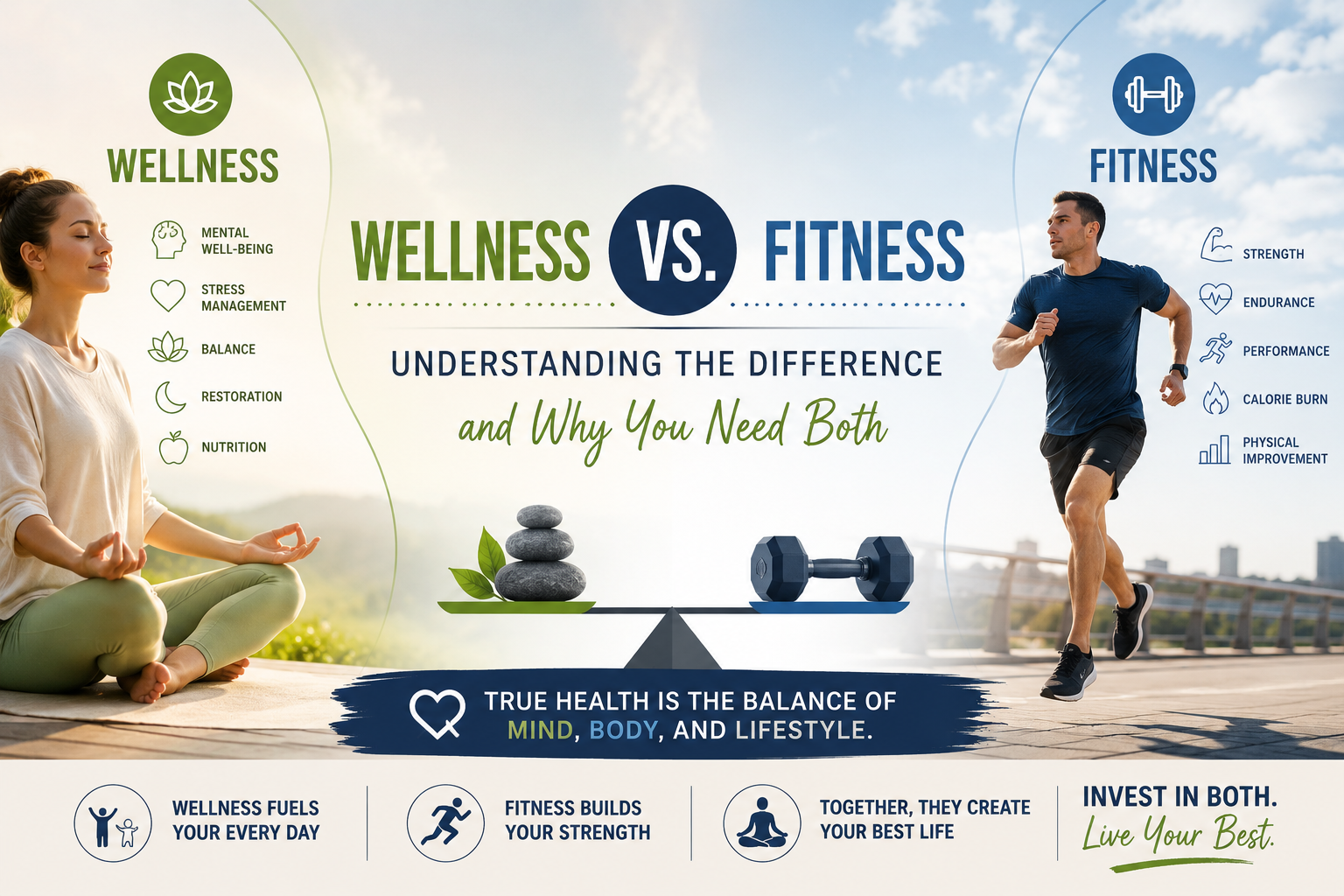
When people set out to improve their health, the focus is often on fitness, joining a gym,
starting a walking program, lifting weights, or training for a race. While these are
excellent goals, fitness is only one component of living a healthy life.
Wellness is a much broader concept. It recognizes that true health isn't measured solely
by how much you can bench press, how fast you can run, or the number on the scale.
Instead, wellness encompasses every aspect of your physical, mental, emotional, and
social well-being.
Understanding the distinction between wellness and fitness can help you create
sustainable habits that support not just a healthier body but a happier, more balanced
life.
What Is Fitness? Fitness refers to your body's ability to perform physical activities safely
and efficiently. Health professionals generally recognize five components of physical
fitness. They include cardiovascular endurance, muscular strength, muscular
endurance, flexibility, and body composition. Improving these areas can lower the risk of
chronic disease, strengthen bones and muscles, improve heart health, increase energy
levels, and enhance mobility throughout life.
The Centers for Disease Control and Prevention (CDC) recommends that adults get at
least 150 minutes of moderate-intensity aerobic activity, along with muscle
strengthening activities on two or more days each week. While these recommendations
provide an excellent foundation for physical health, fitness alone does not guarantee
overall well-being.
What Is Wellness? Wellness is an active process of making choices that support a
healthy and fulfilling life. Unlike fitness, which primarily focuses on physical
performance, wellness recognizes that many aspects of life contribute to overall health.
One of the most widely accepted models identifies eight dimensions of wellness.
Physical wellness includes exercise, nutritious eating, adequate sleep, preventive
healthcare, hydration, and avoiding harmful habits such as smoking or excessive
alcohol consumption.
Emotional wellness involves understanding and managing emotions, coping with stress
in healthy ways, practicing resilience, and seeking support when needed. Intellectual
wellness includes keeping the mind engaged through reading, learning new skills,
solving problems, pursuing hobbies, or continuing education helps promote lifelong
brain health.
Social Wellness involves healthy relationships that provide emotional support, reduce
feelings of isolation, and contribute significantly to overall happiness and longevity.
Finding meaning and satisfaction in work or volunteer activities can improve motivation,
reduce stress, and increase overall life satisfaction.
For some, spirituality comes through religious faith. For others, it may involve
meditation, spending time in nature, practicing gratitude, or living according to personal
values. Creating safe, healthy surroundings and caring for the environment can
contribute to both personal and community well-being.
Financial wellness involves managing money responsibly, planning for future needs,
reducing unnecessary debt, and minimizing financial stress.
Fitness supports wellness and wellness supports fitness; although they're different,
wellness and fitness are closely connected. Regular exercise has been shown to
improve mood, reduce anxiety and depression, promote better sleep, increase energy,
enhance cognitive function, and reduce the risk of numerous chronic diseases at the
same time. Practicing wellness habits makes it easier to stay physically active. For
example, getting enough sleep improves exercise performance and recovery. Managing
stress can reduce fatigue and improve motivation. Eating nutritious foods fuels workouts
and supports muscle repair. Strong social connections often increase accountability and
consistency with healthy habits. Rather than viewing fitness as the end goal, many
health professionals consider it an important component of lifelong wellness.
Modern life places demand on nearly every aspect of our well-being. Long work hours,
financial pressures, chronic stress, poor sleep, and social isolation can all affect our
health even if we're physically active. Research consistently shows that people who
intentionally care for multiple dimensions of wellness experience numerous benefits,
including lower stress levels, better mental health, improved quality of sleep, reduced
risk of chronic illness, stronger immune function, greater resilience during difficult times
and increased life satisfaction. Wellness is not about achieving perfection. Its about
making small, intentional choices that support long-term health.
Creating a healthier life doesn't require a complete overhaul overnight. In fact, lasting
change usually begins with simple, consistent habits. Consider incorporating small
actions such as taking a daily walk, drinking more water, preparing balanced meals,
practicing gratitude, calling a friend or loved one, spending time outdoors, prioritizing
quality sleep, scheduling routine medical checkups, learning something new, and setting
realistic financial goals. These habits may seem small individually, but together they can
create meaningful improvements in overall health and quality of life.
Fitness helps build a stronger body, but wellness builds a healthier life. Exercise is
important, but so are emotional health, meaningful relationships, quality sleep, financial
stability, personal growth, and a sense of purpose. When these areas work together,
they create a foundation for lasting health that extends far beyond the gym.
Instead of asking, "How fit am I?" perhaps the better question is, "How well am I living?"
The answer may be the first step toward a healthier future.
References
Centers for Disease Control and Prevention (2025). Physical Activity Basics for Adults; Global Wellness
Institute. (2024). What Is Wellness?; National Institutes of Health, National Center for Complementary and
Integrative Health. (2024). Exercise and Physical Activity; Substance Abuse and Mental Health Services
Administration. (2024); Eight Dimensions of Wellness (2025).; World Health Organization. (2025).
Physical Activity.