Summer Teaching Tip!
July 12, 2026
Feel like your child needs a little more structure this summer?
Try Dianne’s simple 3-step approach to prevent the “summer slide” and keep learning moving forward—without the overwhelm.
Catching Up…
Breaks from learning are important,
but sometimes when our struggling learners are behind summer can be a great opportunity to catch them up!
Make a “Sidewalk Story”
Try this fun activity to reinforce learning without a formal lesson!

He makes me lie down in green pastures,
he leads me beside quiet waters,
he refreshes my soul.
He guides me along the right paths for his name’s sake.
Psalms 23:2-3 (NIV)
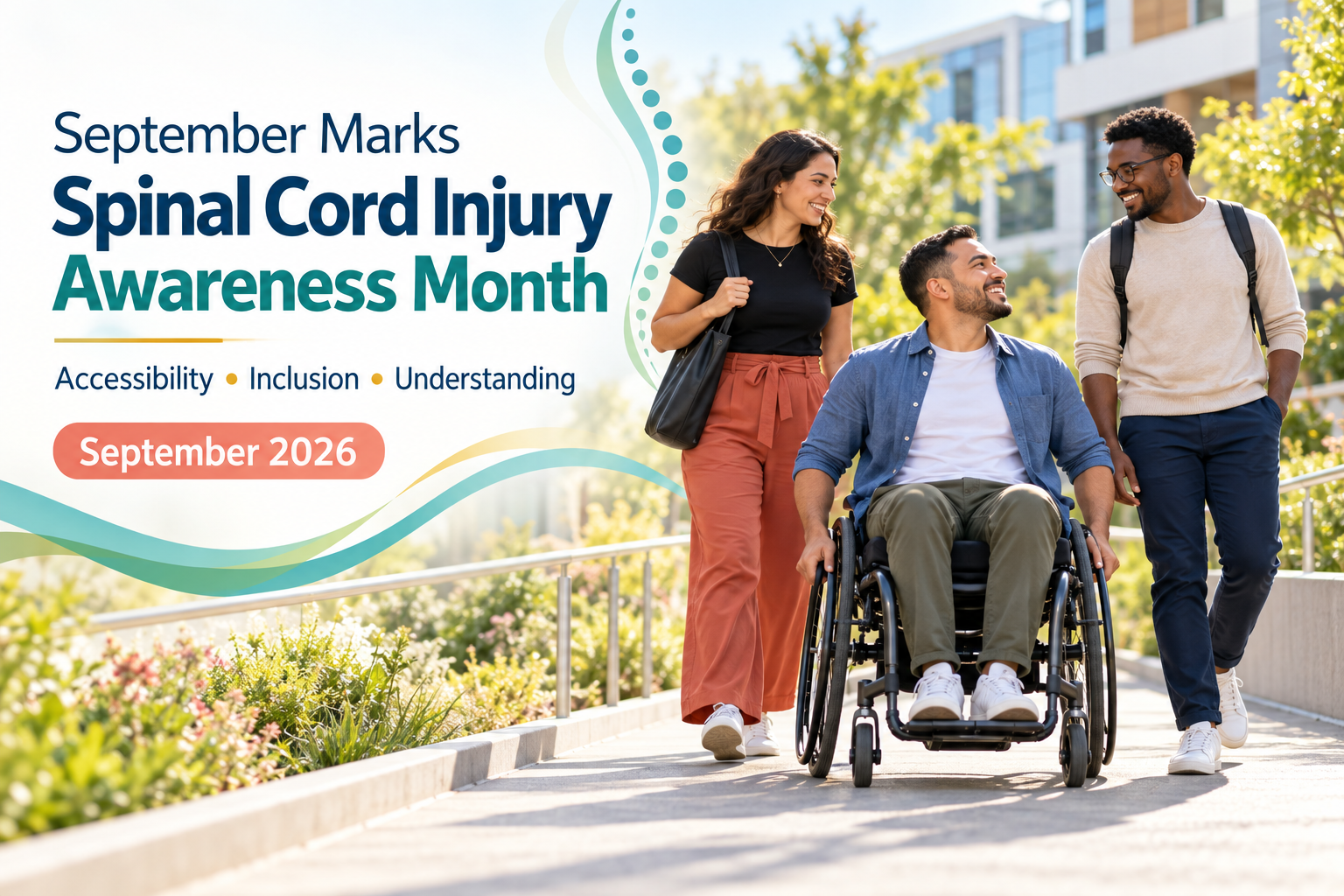
September is recognized as Spinal Cord Injury Awareness Month, a time dedicated to increasing public understanding of spinal cord injuries, supporting people living with them and highlighting the continuing need for accessible health care, rehabilitation, research and community inclusion. The observance has been recognized by the U.S. Senate in multiple years. In 2025, the Senate again designated September as National Spinal Cord Injury Awareness Month, citing the need for continued research, improved treatments and greater awareness of the challenges faced by people living with spinal cord injuries. United Spinal Association also recognizes September as Spinal Cord Injury Awareness Month in its 2026 disability observances. Spinal cord injuries, commonly called SCIs, occur when damage to the spinal cord interferes with communication between the brain and the body. Injuries can result from trauma, such as vehicle crashes or falls, but spinal cord damage can also be caused by disease, tumors, infection, loss of oxygen and other medical conditions. The effects can vary dramatically depending on the location and severity of the injury. An injury affecting the lower portion of the body is generally described as paraplegia, while an injury affecting the arms as well as the lower body is called tetraplegia, formerly commonly called quadriplegia. An injury may also be classified as complete or incomplete depending on how much motor or sensory function remains below the level of injury. More than 18,000 new traumatic spinal cord injuries occur in the United States each year, according to the National Spinal Cord Injury Statistical Center at the University of Alabama at Birmingham. That estimate does not include people who die at the location where the injury occurs. An estimated 257,000 to 388,000 people were living with traumatic spinal cord injuries in the United States in 2023, according to the center. Motor vehicle crashes account for about 38% of traumatic spinal cord injuries recorded since 2015, followed by falls at approximately 32%. Acts of violence account for about 15%, while sports-related injuries represent approximately 8%. Although spinal cord injury is often associated with younger people injured in crashes or sports accidents, it affects people across the lifespan. The average age at the time of injury has risen substantially, from about 29 years in the 1970s to approximately 43 years among people injured since 2015. Loss of the ability to walk is one of the most visible effects of some spinal cord injuries, but SCI can affect nearly every body system. Depending on the location and severity of the injury, people may experience changes in sensation, muscle control, bladder and bowel function, sexual function, circulation, breathing, temperature regulation and blood pressure. Secondary medical conditions can include urinary tract infections, pressure injuries, chronic pain, blood clots, respiratory complications and osteoporosis. Autonomic dysreflexia, a potentially dangerous sudden rise in blood pressure, can occur particularly in people with injuries at or above the T6 level. For many people, rehabilitation becomes an important part of adjusting to life following an injury. Physical therapy, occupational therapy, assistive technology and mobility equipment can help people regain or maximize independence. Recovery also varies widely. Some people regain significant movement or sensation after an incomplete spinal cord injury, while others experience permanent paralysis. Improvements may continue long after an initial hospitalization or rehabilitation stay, and the course of recovery is different for every individual. Spinal Cord Injury Awareness Month also brings attention to challenges that extend beyond medical care. Accessible housing, transportation, workplaces, public buildings and recreational spaces can significantly affect whether people with disabilities can participate independently in their communities. Wheelchairs and other mobility devices are tools of independence, but physical barriers such as stairs, narrow doorways, inaccessible bathrooms and inadequate transportation can restrict opportunities that would otherwise be available. Employment is another important issue. Advances in technology and remote work have expanded opportunities for some people with mobility disabilities, but inaccessible workplaces, transportation problems and misconceptions about disability can remain obstacles. Awareness means recognizing that disability does not automatically mean dependence. People with spinal cord injuries work, raise families, travel, participate in sports, volunteer, pursue education and remain active in their communities. Scientists continue to investigate ways to limit damage immediately following a spinal cord injury and improve function afterward. Research includes nerve regeneration, neuroprotection, electrical stimulation, rehabilitation technologies, brain-computer interfaces and other approaches aimed at restoring movement or improving independence. Federal lawmakers, disability organizations and research institutions have repeatedly emphasized the importance of funding clinical research and developing new treatments for spinal cord injury. The 2025 Senate resolution recognizing SCI Awareness Month specifically called for continued research and clinical trials for promising therapies. Even when a cure is not available, advances in rehabilitation, assistive technology and medical management can improve health, function and quality of life. Spinal Cord Injury Awareness Month is ultimately about more than statistics. It provides an opportunity to learn about an injury that can occur suddenly and permanently change the way a person interacts with the world. It also highlights the importance of prevention, emergency treatment, rehabilitation, accessible communities and continued medical research. Just as important is understanding that a spinal cord injury is only one part of a person's life. A wheelchair, walker or other mobility device may make a disability visible, but it does not define a person's abilities, ambitions or value. September offers an opportunity to replace assumptions with knowledge — and awareness with greater accessibility, inclusion and understanding. References National Spinal Cord Injury Statistical Center, University of Alabama at Birmingham. “Frequently Asked Questions.” Includes current U.S. estimates for spinal cord injury incidence, prevalence, causes, demographics and complications. United Spinal Association. “United Spinal Related Observances.” Lists September as Spinal Cord Injury Awareness Month for 2026. Christopher & Dana Reeve Foundation. “Spinal Cord Injury.” Information on causes, types and effects of spinal cord injury. Christopher & Dana Reeve Foundation. “Secondary Conditions.” Information about medical complications associated with paralysis and spinal cord injury. U.S. Senate. Senate Resolution 440, 119th Congress, designating September 2025 as National Spinal Cord Injury Awareness Month and supporting research, clinical trials and improved quality of life for people living with spinal cord injuries.
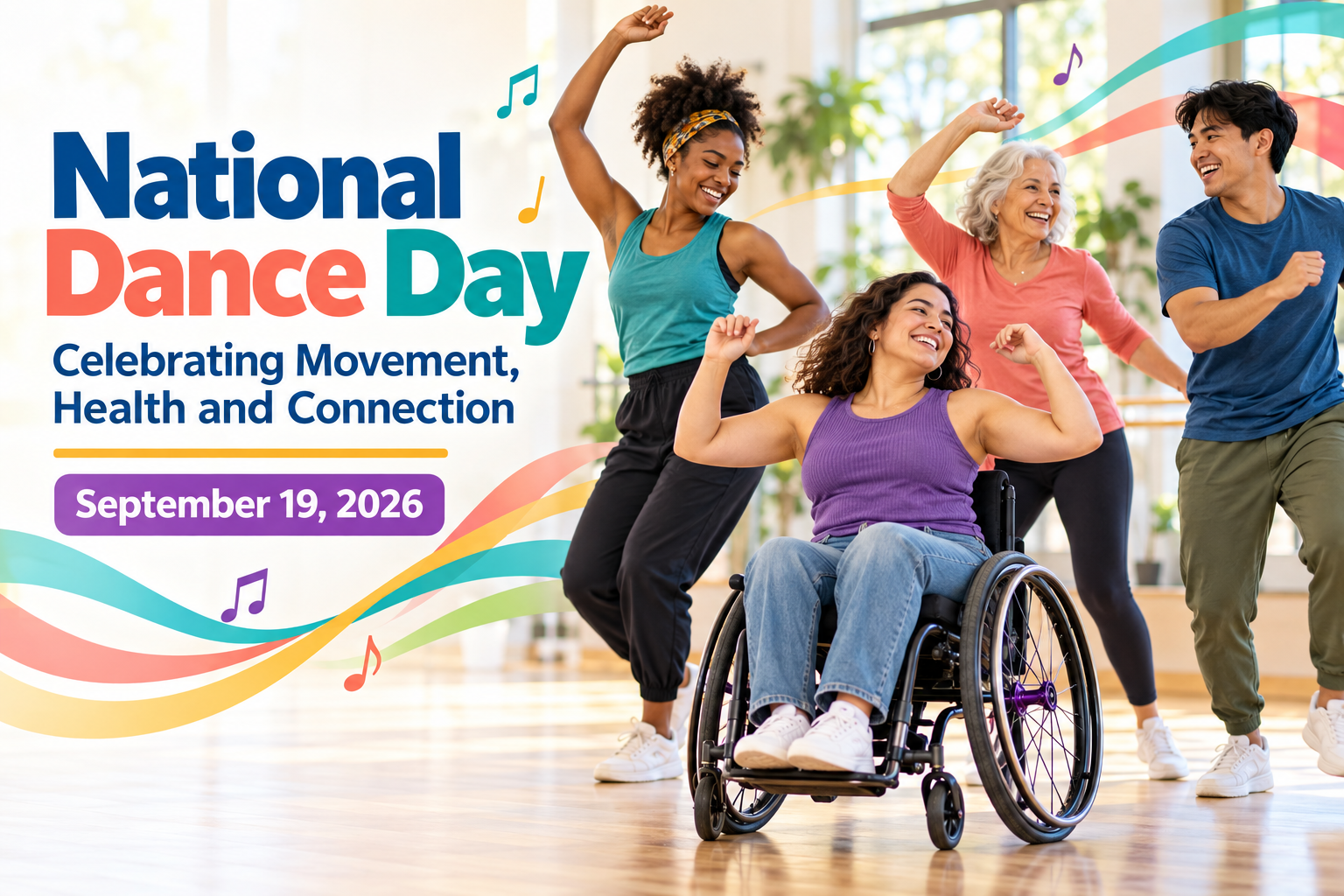
Dance is more than entertainment. It is movement, expression, exercise and, for many people, a powerful way to connect with others. Each year, National Dance Day celebrates the many ways dance can bring people together while encouraging people of all ages and abilities to get moving. National Dance Day is observed in September and was created to promote dance as a fun and accessible form of physical activity. The celebration is supported by American Dance Movement, an organization dedicated to increasing access to dance and highlighting its physical, emotional and social benefits. Dance has existed across cultures and generations as a form of storytelling, celebration and self-expression. It can also provide significant health benefits. Regular dancing can improve cardiovascular fitness, strength, balance, coordination and flexibility. Because it combines movement with music and memory, dance can also challenge the brain while encouraging creativity. Dance does not have to mean formal lessons or complicated choreography. Moving to music at home, participating in a community class or simply swaying and tapping along to a favorite song can all be forms of dance. For people who may have limited mobility, dance can also be adapted. Seated dance, upper-body movement and other modified forms of dance allow people with disabilities or physical limitations to participate in ways that work for them. One of the goals of National Dance Day is to make dance available to everyone. Community organizations, schools, dance studios and fitness programs often use the observance as an opportunity to introduce people to different styles of dance and encourage participation regardless of experience level. Dance can cross age, cultural and language barriers. From ballet and ballroom dancing to hip-hop, jazz, folk dancing and line dancing, every style offers its own form of expression and movement. National Dance Day also emphasizes that people do not have to consider themselves “dancers” to participate. The goal is simply to move. National Dance Day can be celebrated in many ways. People can turn on a favorite song and dance at home, attend a community dance event, try a new dance class or learn simple choreography with friends or family. American Dance Movement has also promoted National Dance Day routines and video challenges designed to encourage people across the country to participate together. Schools and community organizations can use the day to introduce children and adults to different styles of dance or discuss the role dance has played in cultures throughout history. Even a few minutes of movement can be a meaningful way to participate. Perhaps one of the most important messages behind National Dance Day is that movement looks different for everyone. Dance does not require a particular body type, age or level of physical ability. A person can dance standing, seated, with assistance or through whatever movement is available to them. At its heart, dance is about expression. National Dance Day offers a reminder that movement can be joyful rather than simply something we do for exercise. Whether it happens on a stage, in a studio, in a wheelchair, in the kitchen or alone in the living room, dance gives people an opportunity to connect music, movement and emotion. On National Dance Day, the invitation is simple: Turn on the music, move in whatever way you can and celebrate what your body is able to do. References American Dance Movement. “National Dance Day.” American Dance Movement. The organization promotes National Dance Day and encourages participation through dance events, choreography and community programs. American Dance Movement. “American Dance Movement Announces New September Date for National Dance Day.” June 4, 2019. National Dance Day was moved from July to the third Saturday in September to expand participation, including through schools. U.S. House of Representatives. H. Res. 1350, 117th Congress. The resolution supports National Dance Day and recognizes dance for its contributions to physical fitness, dance education and artistic expression. Congressional Record. “Celebrating National Dance Day.” July 30, 2010. The congressional remarks describe National Dance Day as a celebration of dance as an art form and a way to promote physical activity and health.
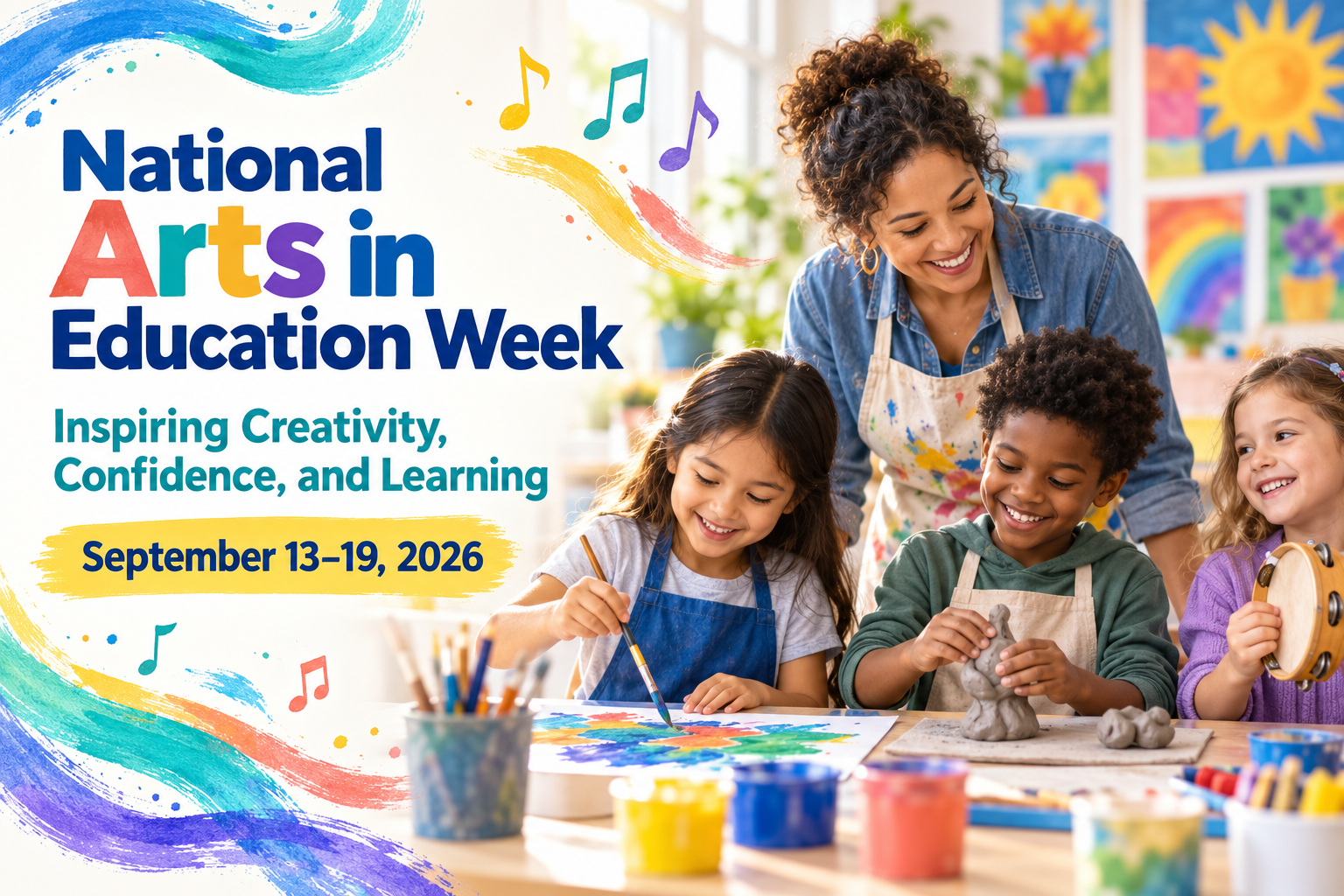
Every child deserves the opportunity to create. Whether it is through painting, music, theater, dance, photography, creative writing, or digital media, the arts give students ways to express themselves, explore ideas, and discover abilities they may not realize they possess. During National Arts in Education Week, September 13–19, 2026 , schools, families, artists, and communities across the country celebrate the important role arts education plays in helping young people learn and grow. National Arts in Education Week has its roots in a 2010 congressional resolution supporting the designation of the week beginning on the second Sunday of September as Arts in Education Week. The resolution recognized the arts as an important part of education and encouraged communities and elected officials to raise awareness about their value. For generations, subjects such as music, visual arts, theater, and dance have sometimes been treated as extra activities to be offered only when school schedules and budgets allow. But arts education is much more than an extracurricular activity. Under Every Student Succeeds Act, music and the arts are specifically included among the subjects that can contribute to a well-rounded education. The National Endowment for the Arts also emphasizes that arts education can help students develop creative thinking skills, self-expression, engagement, and opportunities for personal growth. When students create something themselves, learning becomes active. A child painting a picture makes choices about color, shape, composition, and meaning. A student learning an instrument develops patience through repeated practice. A young actor must listen, remember, interpret, and collaborate with others. A dancer learns discipline, movement, timing, and persistence. A student creating a film or photograph learns to communicate ideas through images. These experiences teach skills that extend far beyond an art classroom. One of the most powerful aspects of arts education is that there is rarely only one correct way to create. Students are encouraged to experiment, make mistakes, try again, and develop their own ideas. That process can help build confidence and resilience. For a child who struggles in a traditional academic environment, an art room, music class, theater production, or dance program may also become the place where that student finally discovers something at which they excel. That discovery matters. Every student needs opportunities to experience success. The arts can provide another doorway into learning — one that allows students with different abilities, interests, backgrounds, and learning styles to participate and contribute. Research has found meaningful associations between participation in the arts and a range of positive student outcomes. The National Endowment for the Arts has reported that arts education is linked with academic achievement as well as social and emotional development. Research involving students from lower socioeconomic backgrounds has also found associations between strong arts participation and outcomes such as higher educational achievement, college enrollment, career aspirations, and civic engagement. The arts can also support emotional well-being. Creative activities give young people constructive ways to explore feelings, tell their stories, connect with other people, and process experiences that may be difficult to express with words alone. Those benefits can be particularly important during childhood and adolescence, when students are still developing their identities and learning how to understand the world around them. Arts education is not valuable only for students who intend to become professional artists. Creativity is needed everywhere. Engineers design. Entrepreneurs imagine new products. Scientists develop new approaches to problems. Writers communicate ideas. Architects combine creativity with mathematics and engineering. Technology professionals design everything from websites and video games to digital experiences. Healthcare professionals frequently rely on observation, communication, creativity, and problem-solving. The ability to imagine something that does not yet exist — and then determine how to create it — is one of the fundamental skills developed through the arts. Although the benefits of arts education are widely recognized, not every student has equal access to high-quality arts programs. Schools serving disadvantaged communities can face limited resources, fewer specialized instructors, and reduced opportunities for students to participate in arts learning. That makes access an important part of the National Arts in Education Week conversation. The National Endowment for the Arts has made expanding access to arts education, particularly for students who have the fewest opportunities, an important part of their arts education work. The goal should not be to reserve arts education for students whose families can afford private music lessons, dance classes, theater programs, or art supplies. Creative opportunities should be available to every child. National Arts in Education Week is also an opportunity to recognize the teachers and professionals who make those experiences possible. Arts educators do far more than teach students how to paint, perform, dance, sing, or play an instrument. They encourage students to take chances. They teach them that improvement takes practice. They show them that mistakes can become part of the creative process. They introduce students to cultures, histories, artists, ideas, and perspectives beyond their own experiences. And sometimes, they become the person who recognizes a talent in a child before that child recognizes it in themselves. During National Arts in Education Week, we celebrate those educators, the schools and organizations that support them, and most importantly, the students whose imaginations they inspire. Because education should do more than teaching young people what the world already knows. It should also give them confidence and creativity to imagine what the world could become. National Endowment for the Arts. (n.d.). Arts education. https://www.arts.gov/impact/arts-education ; National Endowment for the Arts. (2025). Educating ourselves about childhood arts experiences—and why they matter. https://www.arts.gov/stories/blog/2025/educating-ourselves-about-childhood-arts-experiences-and-why-they-matter ; National Endowment for the Arts. (n.d.). Back to school with arts education. https://www.arts.gov/back-school-arts-education ; National Endowment for the Arts. (2012). New NEA research report shows potential benefits of arts education for at-risk youth. https://www.arts.gov/news/press-releases/2012/new-nea-research-report-shows-potential-benefits-arts-education-risk-youth ; U.S. Congress. (2010). H. Con. Res. 275: Expressing support for designation of the week beginning on the second Sunday of September as Arts in Education Week. 111th Congress. https://www.congress.gov/bill/111th-congress/house-concurrent-resolution/275 ; U.S. Department of Education. (n.d.). Arts Education National Program. https://www.ed.gov/grants-and-programs/grants-birth-grade-12/well-rounded-education-grants/arts-education-national-program ; U.S. Department of Education, Assistance for Arts Education Center. (n.d.). Arts education resources. https://aaec.ed.gov/ed-arts-education-resources

Each year, National Folic Acid Awareness Week brings attention to one of the simplest steps people can take to support a healthy pregnancy and reduce the risk of certain serious birth defects. In 2026, the observance is recognized September 13–19. Folic acid is the synthetic form of folate, also known as vitamin B9. Folate plays an essential role in helping the body make new cells, including blood, brain, skin, hair, and nail cells. Although everyone needs folate, folic acid is especially important for people who may become pregnant because of the critical role it plays during the earliest weeks of fetal development. One of the most important benefits of folic acid is its ability to help prevent neural tube defects. These are serious birth defects involving the developing brain and spinal cord. Two of the best-known neural tube defects are spina bifida, which affects the spine, and anencephaly, which affects the brain and skull. What makes folic acid awareness especially important is timing. The neural tube begins forming and closing during the third and fourth weeks of pregnancy. At that point, many people may not yet realize that they are pregnant. For that reason, the Centers for Disease Control and Prevention recommends that all women who are capable of becoming pregnant get 400 micrograms of folic acid every day, rather than waiting until pregnancy is confirmed. Folic acid can be obtained in several ways. It is commonly included in multivitamins and prenatal vitamins and is also added to many fortified foods. These may include enriched bread, pasta, rice, breakfast cereals, flour, and some corn masa products. Naturally occurring folate can also be found in foods such as leafy green vegetables, beans, peas, oranges, and other fruits. However, naturally occurring folate and folic acid are not the same. Folic acid is more stable than many forms of food, folate and is the form that has been shown through research to help prevent neural tube defects. Eating a nutritious diet remains important, but fortified foods or a vitamin containing folic acid can help ensure that the recommended daily amount is reached. Folic acid also serves important functions beyond pregnancy. Because folate is necessary for DNA production, cell division, and the creation of new cells, adequate intake is important throughout life. For some individuals, the recommended amount of folic acid may be different. People who previously had a pregnancy affected by a neural tube defect, take certain medications, or have medical conditions may be advised by a healthcare professional to take a higher amount. Higher doses should be discussed with a physician or other qualified healthcare provider rather than started independently. National Folic Acid Awareness Week is ultimately about education and prevention. Many pregnancies are unplanned, and the development that folic acid helps protect occurs very early. Making adequate folic acid intake part of everyday nutrition helps provide protection before pregnancy even begins. A vitamin measured in micrograms may seem insignificant, but its impact can be enormous. This National Folic Acid Awareness Week, the message is simple: learn about folic acid, check food and vitamin labels, and understand why getting enough of this essential nutrient every day can make such an important difference. Centers for Disease Control and Prevention. (2026). About folic acid. https://www.cdc.gov/folic-acid/about/index.html Centers for Disease Control and Prevention. (2026). Folic acid: Sources and recommended intake. https://www.cdc.gov/folic-acid/about/intake-and-sources.html Centers for Disease Control and Prevention. (2025). Neural tube defects. https://www.cdc.gov/birth-defects/about/neural-tube-defects.html Centers for Disease Control and Prevention. (2026). Folic acid: Facts for clinicians. https://www.cdc.gov/folic-acid/hcp/clinical-overview/index.html National Birth Defects Prevention Network. (2026). National Folic Acid Awareness Week. https://nbdpn.org/national-folic-acid-awareness-week/ National Birth Defects Prevention Network. (2026). Resources: National Folic Acid Awareness Week. https://nbdpn.org/resources/
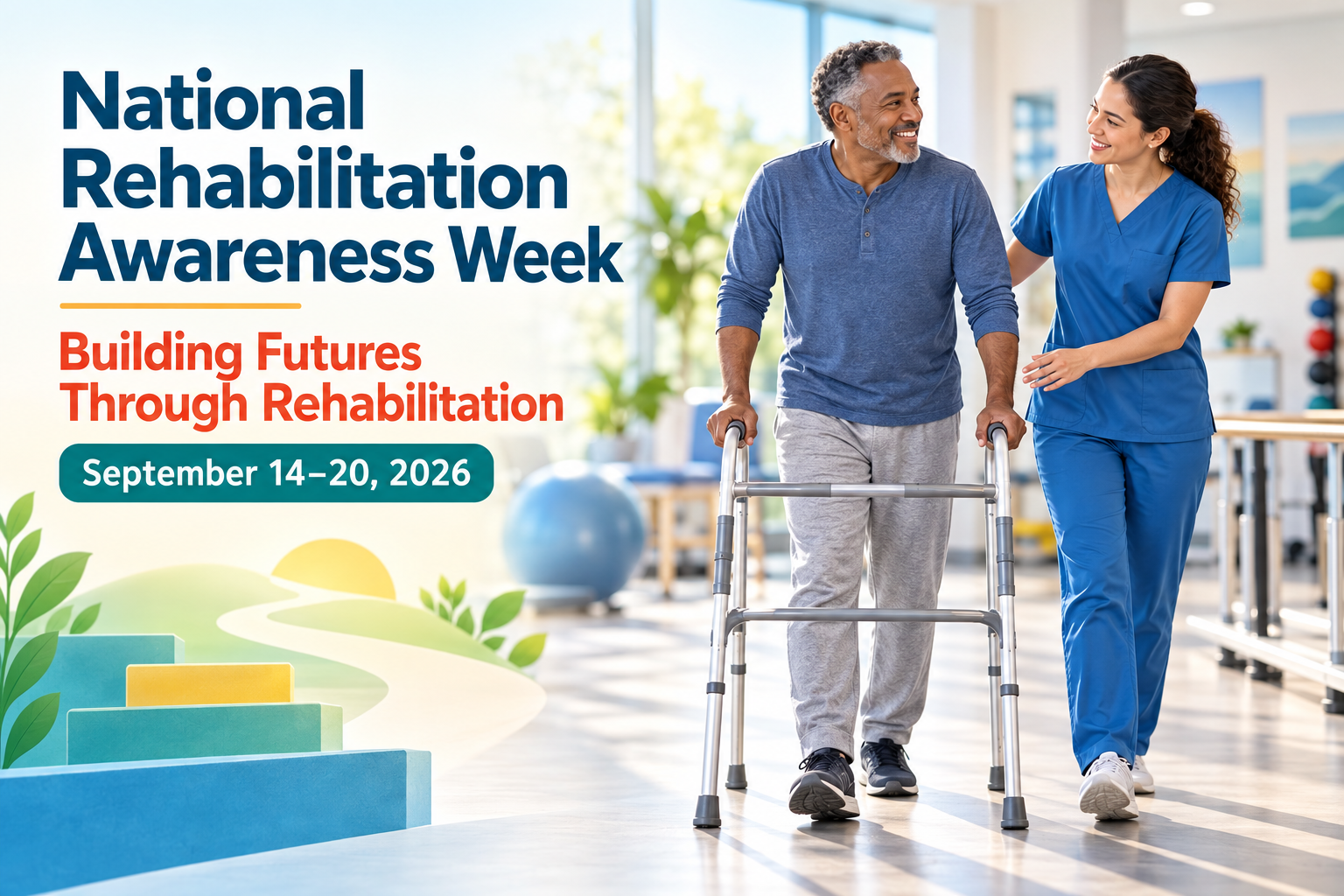
Each September, National Rehabilitation Awareness Week recognizes the remarkable impact rehabilitation can have on people recovering from illness, injury, surgery, or disabling conditions. In 2026, National Rehabilitation Awareness Week is observed September 14–20 under the theme “Building Futures Through Rehabilitation.” Rehabilitation is about much more than recovering from an injury. At its heart, rehabilitation is about helping people regain abilities, adapt to changes, increase independence, and participate as fully as possible in everyday life. For some, rehabilitation may mean learning to walk again after a serious accident or surgery. For others, it may involve relearning how to speak following a stroke, developing new ways to complete everyday activities after a spinal cord injury, improving strength after a prolonged hospitalization, or learning to use adaptive equipment that makes greater independence possible. The World Health Organization describes rehabilitation as an essential health service that helps people improve or maintain functioning when illness, injury, disability, surgery, or aging affects their ability to perform everyday activities. And the need is enormous. Globally, an estimated one in three people lives with a health condition that could benefit from rehabilitation. Rehabilitation is a team effort. One of the greatest strengths of rehabilitation is its interdisciplinary approach. Depending on an individual's needs, a rehabilitation team may include physical medicine and rehabilitation physicians, rehabilitation nurses, physical therapists, occupational therapists, speech-language pathologists, social workers, case managers, psychologists, recreation therapists, prosthetists, orthotists, and other specialists. Each professional contributes something different. Physical therapists may work on strength, balance, mobility, transfers, endurance, and walking. Occupational therapists help people regain or adapt the skills needed for daily life, including dressing, bathing, cooking, working, and participating in activities that are personally meaningful. Speech-language pathologists may help people who experience difficulties with speech, language, cognition, communication, or swallowing. Rehabilitation nurses provide specialized medical care while also helping patients learn how to manage medications, bowel and bladder care, skin protection, mobility, and other health needs. Together, these professionals establish goals with the individual and work toward something that can be difficult to measure on a medical chart: independence . Progress doesn't always look the same. Recovery is rarely a straight line. There may be dramatic milestones, but rehabilitation is often made up of smaller victories that can mean everything to the person experiencing them. Standing for a few more seconds, taking another step, transferring safely from a wheelchair, buttoning a shirt independently, preparing a meal, speaking a word clearly, returning to work, driving again, learning to navigate the community using a mobility device or doing something independently that once required another person's help. To someone watching from the outside, these accomplishments may appear small. To the individual who has spent weeks, months, or even years working toward them, they can represent an extraordinary amount of determination. Rehabilitation professionals understand the importance of those victories. They are often the people encouraging patients when progress feels slow and reminding them how far they have already come. An important misconception about rehabilitation is that its only purpose is to restore someone to exactly the way they were before an illness or injury. Sometimes that is possible. Sometimes it isn't. Successful rehabilitation may instead mean helping someone discover a new way to live independently and meaningfully. Adaptive equipment, wheelchairs, prosthetic and orthotic devices, communication technology, home modifications, and new strategies for completing everyday activities can dramatically increase independence and participation. The goal becomes not simply returning to the past but building the best possible future. That is what makes the 2026 theme, “Building Futures Through Rehabilitation,” especially meaningful. Rehabilitation Benefits More Than the Individual. The benefits of rehabilitation extend beyond the therapy room. According to the World Health Organization, rehabilitation can help prevent complications, shorten hospital stays, reduce hospital readmissions, and help people return to work, education, family life, and their communities. It can also help people remain independent in their own homes and reduce the need for long-term assistance. Rehabilitation therefore represents not only compassionate healthcare but an important investment in individuals, families, communities, and healthcare systems. National Rehabilitation Awareness Week also gives us an opportunity to recognize the professionals who devote their careers to helping others reclaim pieces of their lives. Their work demands clinical knowledge, creativity, patience, encouragement, and an understanding that no two rehabilitation journeys are identical. Perhaps most importantly, rehabilitation professionals often see possibility at moments when their patients cannot yet see it themselves. They challenge. They encourage. They adapt. They celebrate. And then they challenge their patients again. Behind nearly every rehabilitation success story is a team of professionals who refuse to stop looking for the next possibility. During National Rehabilitation Awareness Week, we recognize those professionals — and the millions of individuals who work alongside them every day to regain function, increase independence, overcome obstacles, and build their futures. Because rehabilitation is not simply about what a person has lost. It is about discovering what is still possible. American Medical Rehabilitation Providers Association. (2026). National Rehabilitation Awareness Week. https://amrpa.org/national-rehabilitation-awareness-week/ ; Centers for Medicare & Medicaid Services. (2009). CMS adopts inpatient rehabilitation facility coverage requirements. https://www.cms.gov/newsroom/fact-sheets/cms-adopts-inpatient-rehabilitation-facility-coverage-requirements ; World Health Organization. (2024). Rehabilitation: Questions and answers. https://www.who.int/news-room/questions-and-answers/item/rehabilitation ; World Health Organization. (n.d.). Rehabilitation. https://www.who.int/health-topics/rehabilitation ; World Health Organization. (2023). Package of interventions for rehabilitation. https://www.who.int/teams/noncommunicable-diseases/sensory-functions-disability-and-rehabilitation/rehabilitation/service-delivery/package-of-interventions-for-rehabilitation/ ; World Health Organization. (2026). Rehabilitation: A non-negotiable pillar of universal health coverage. https://www.who.int/publications/m/item/rehabilitation--a-non-negotiable-pillar-of-universal-health-coverage
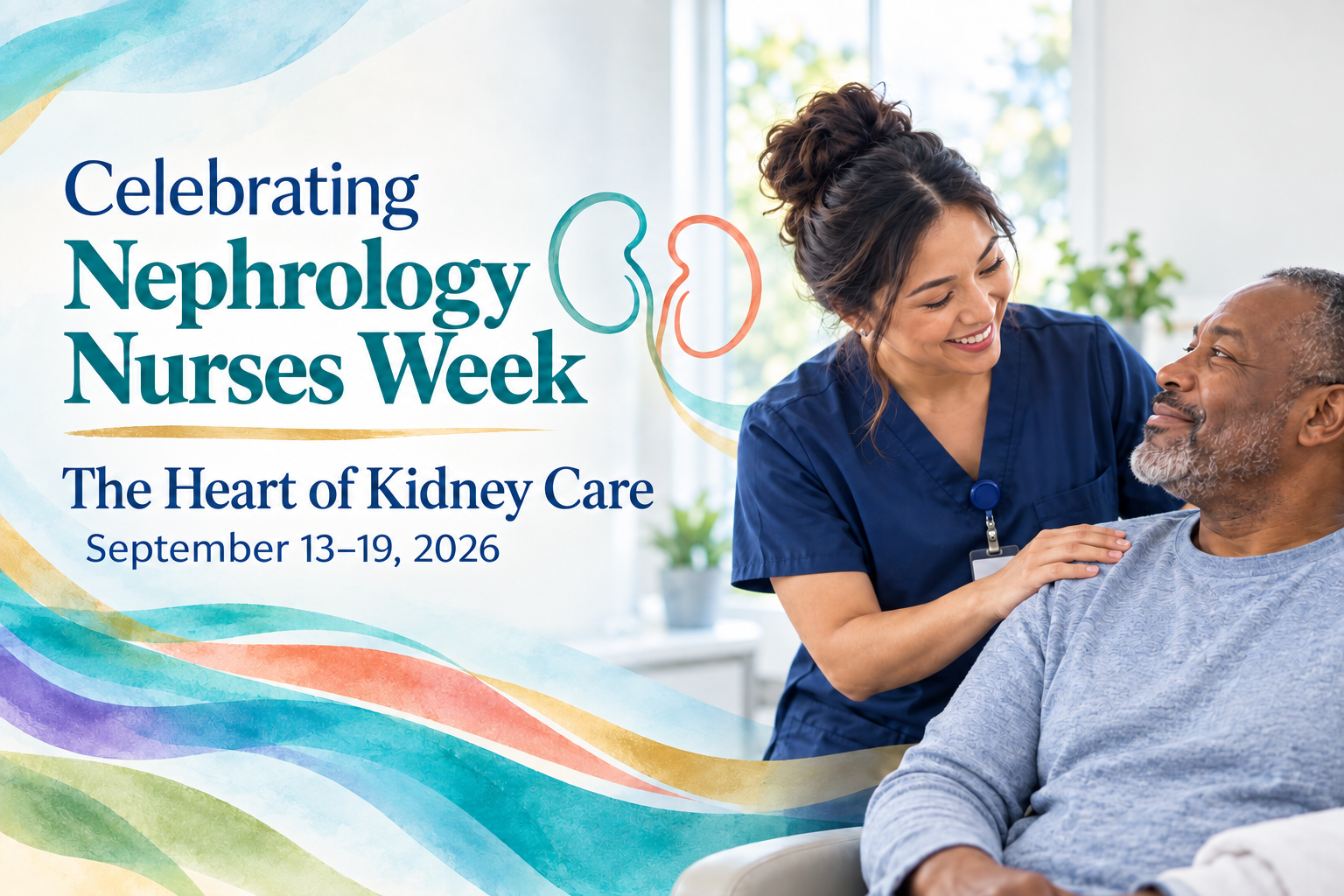
Every day, nephrology nurses provide specialized care, education, encouragement, and compassion to people facing kidney disease. During Nephrology Nurses Week, September 13–19, 2026 , we recognize these remarkable healthcare professionals and the vital role they play in the lives of their patients. The American Nephrology Nurses Association has chosen “Colors of Courage: The Vibrant Spirit of Nephrology Nurses” as the theme for this year’s celebration. It is a fitting tribute to nurses whose work requires not only extensive clinical knowledge, but also patience, adaptability, strength, and an extraordinary ability to build lasting relationships with the people in their care. Nephrology nursing is a highly specialized field. These nurses care for people of all ages who have kidney disease or are at risk of developing it. Their work can take place in hospitals, dialysis centers, outpatient clinics, patients’ homes, transplant programs, and many other healthcare settings. For individuals receiving dialysis, a nephrology nurse can become one of the most familiar faces in their healthcare journey. Dialysis treatments may occur several times each week and continue for years. During that time, nurses do far more than monitor equipment and vital signs. They assess patients for complications, administer medications, manage vascular access, provide education about diet and fluid restrictions, coordinate care, and help patients understand an often-complicated medical condition. Just as importantly, they listen. Living with chronic kidney disease can affect nearly every part of a person’s life. Patients may face fatigue, dietary restrictions, frequent medical appointments, financial concerns, uncertainty about the future, and the emotional challenges that accompany chronic illness. Nephrology nurses often become trusted sources of reassurance and support through all of it. Their expertise is also critical when kidney disease becomes acute. In hospitals and intensive care units, nephrology nurses may care for seriously ill patients experiencing sudden kidney failure and requiring complex renal replacement therapies. Others work with patients preparing for or recovering from kidney transplantation, helping them navigate an entirely new chapter of care. The profession requires a unique combination of science and humanity. Nephrology nurses must understand sophisticated technology and constantly changing clinical conditions while never losing sight of the individual receiving that care. Nephrology Nurses Week was established by the American Nephrology Nurses Association to give patients, families, employers, and communities an opportunity to recognize these nurses for their life-saving work. It also highlights the many career opportunities available within this diverse nursing specialty. This week is an opportunity to say something that may not be said often enough: Thank you. Thank you for the early mornings and long shifts. Thank you for watching carefully when something does not seem quite right. Thank you for explaining the same complicated information until a frightened patient understands it. Thank you for celebrating improvements, providing comfort during setbacks, and treating people as individuals rather than diagnoses. And thank you for bringing knowledge, courage, compassion, and hope to kidney care every single day. During Nephrology Nurses Week, we celebrate the nurses whose skills help sustain life — and whose humanity makes that life a little easier along the way. American Nephrology Nurses Association. (2026). Nephrology Nurses Week: Colors of Courage: The Vibrant Spirit of Nephrology Nurses. https://www.annanurse.org/event/nephrology-nurses-week/ ; National Institute of Diabetes and Digestive and Kidney Diseases. (n.d.). What is kidney failure? U.S. Department of Health and Human Services. https://www.niddk.nih.gov/health-information/kidney-disease/kidney-failure/what-is-kidney-failure ; National Institute of Diabetes and Digestive and Kidney Diseases. (n.d.). Kidney transplant. U.S. Department of Health and Human Services. https://www.niddk.nih.gov/health-information/kidney-disease/kidney-failure/kidney-transplant ; National Kidney Foundation. (n.d.). Key points: About dialysis for kidney failure. https://www.kidney.org/key-points-about-dialysis-kidney-failure ; National Kidney Foundation. (2026). Stage G5 chronic kidney disease (CKD). https://www.kidney.org/kidney-topics/stage-g5-chronic-kidney-disease-ckd
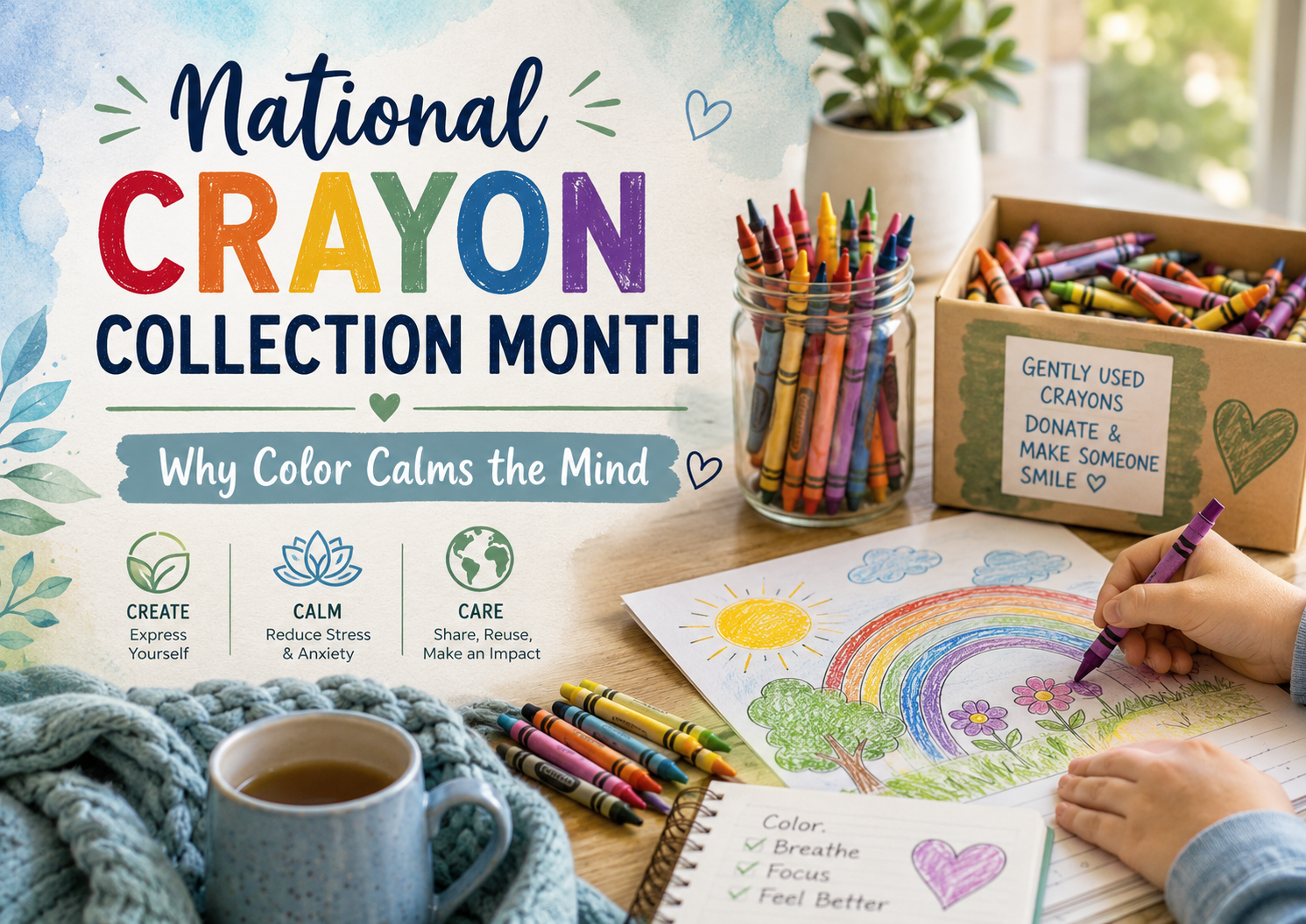
Every August, National Crayon Collection Month celebrates creativity, education, sustainability, and the positive impact art has on mental well-being. The observance encourages people to collect gently used crayons and donate them to children who can benefit from creative expression while keeping usable crayons out of landfills. Coloring is a form of active mindfulness. Focusing on choosing colors and filling shapes redirects attention away from daily stressors and toward the present moment. This simple activity can quiet racing thoughts and promote relaxation. Research suggests coloring may reduce stress, encourage mindfulness, provide a healthy creative outlet, improve concentration, and create a sense of accomplishment after completing a picture. For children, coloring also strengthens fine motor skills, hand-eye coordination, and early writing readiness. Although color preferences vary by person and culture, cool colors such as blues and greens are often associated with calmness, while brighter colors like yellow may evoke optimism and energy. The combination of focused attention and enjoyable color choices contributes to the relaxing effects of coloring. You can celebrate National Crayon Collection Month by donating gently used crayons, host a community collection drive, enjoy a family coloring session, or pick up an adult coloring book for a relaxing screen-free activity. A simple box of crayons can spark creativity, sup port emotional well-being, and make a meaningful difference for children. References Cleveland Clinic. 3 Reasons Adult Coloring Can Actually Relax Your Brain. Mayo Clinic Health System. Coloring is Good for Your Health.3. Elliot, A. J. (2019). A Historically Based Review of Empirical Work on Color and Psychological Functioning. St. Louis Children's Hospital. Why I Still Encourage Crayons. National Day Calendar. National Crayon Collection Month. Awareness Days. National Crayon Collection Month.

By Julia Welch I was so excited to write about this subject! I have five rescue animals, three dogs and two cats. While I’m recovering from a spinal cord injury, they have been saving my grace. When I joined The 34 Project for my recovery, I discovered that there are two dogs that are a mainstay at the gym, Daisy and Dexter. They bring me so much joy every time I go to the gym! Many other dogs visit; some are service dogs, and there is even a skunk that visits! Included at the bottom of this article are numerous pictures of the animals we have the pleasure of interacting with. I hope you enjoy them! There's a reason many dog owners say their four-legged companions are members of the family. Whether it's the enthusiastic tail wag when you walk or roll through the door, the comforting presence during difficult times, or the joyful excitement over something as simple as a walk around the block, dogs have a remarkable ability to brighten our lives. Science is beginning to explain why. Researchers have discovered that our relationships with dogs involve complex interactions between the brain, hormones, emotions, and behavior. From the release of “feel-good” chemicals to the possibility that mirror neuron systems help us connect emotionally, our canine companions may improve our mental well-being in ways we’re only beginning to understand. The human-dog bond is more than emotional. Humans have lived alongside dogs for thousands of years. During that time, dogs evolved to understand human facial expressions, body language, tone of voice, and even our emotions. Studies show that dogs can recognize when we're happy, stressed, frightened, or sad. Many owners have experienced a dog quietly resting beside them during a difficult day or responding excitedly when they celebrate good news. This emotional connection goes both ways. Researchers describe this as emotional contagion, the tendency for emotions to spread between individuals. Just as people often smile when others smile, dogs and humans frequently influence each other's emotional states. One possible explanation for this emotional connection involves mirror neurons. Mirror neurons are specialized brain cells first discovered in monkeys during the 1990s. These neurons become active not only when an individual performs an action but also when they observe someone else performing the same action. Scientists believe mirror neuron systems may contribute to empathy, learning through observation, and understanding the emotions of others. Although researchers continue to study exactly how mirror neurons function in humans, many neuroscientists believe they may play a role in why we instinctively respond to another person's smile, or even to a dog's joyful behavior. When your dog greets you with excitement, playfulness, and affection, your brain may naturally mirror some of that positive emotional state, helping lift your own mood. Mirror neurons may be only part of the story. One of the most powerful biological responses occurs through the release of oxytocin, often called the "love hormone" or "bonding hormone." Research has shown that when people make eye contact with or pet their dogs, oxytocin levels increase in both humans and dogs. Oxytocin helps promote feelings of trust, strengthen social bonds, reduce stress, increase feelings of safety, and encourage relaxation. This same hormone plays an important role in parent-child bonding, close friendships, and healthy romantic relationships. In many ways, interacting with a beloved dog activates similar biological pathways. Life is full of deadlines, responsibilities, and unexpected challenges. Dogs often provide a welcome antidote. Numerous studies have found that spending time with dogs can lower levels of cortisol, the body's primary stress hormone. Even brief interactions, such as petting a friendly dog for several minutes, have been associated with reduced stress and improved mood. Many hospitals, nursing homes, colleges, and rehabilitation centers now incorporate therapy dogs because of these calming effects. Dogs live almost entirely in the present moment. They aren't worried about tomorrow's meeting or yesterday's mistakes. They celebrate simple pleasures like a favorite toy, a walk around the neighborhood, a game of fetch, a sunny patch of grass, or spending time with their favorite person. Watching a dog experience pure joy over everyday moments often reminds us to slow down and appreciate life's simple pleasures. The benefits aren't limited to emotional health. Dog ownership has been associated with several healthy lifestyle behaviors, including Increased physical activity through daily walks, more time spent outdoors, greater social interaction with neighbors and other pet owners, more consistent daily routines, and reduced feelings of loneliness. These habits contribute to both physical and mental wellness. Perhaps one of the greatest gifts dogs offer is unconditional acceptance. Dogs don't care about your job title, appearance, income, or social status; they're simply happy you're home. For individuals coping with grief, anxiety, depression, chronic illness, disability, or major life transitions, that unwavering companionship can provide tremendous emotional comfort. While dogs aren't a substitute for professional mental health care when it's needed, they often become an important part of a person's overall support system. Dog Month is the perfect opportunity to recognize everything our canine companions do for us. You can celebrate by taking an extra walk together, trying a new enrichment activity, scheduling a wellness exam with your veterinarian, teaching a new trick, donating to a local animal shelter, volunteering with a rescue organization, or simply spending quality time together. The greatest gift your dog wants isn't an expensive toy; it's your attention. Our connection with dogs is rooted in far more than companionship. Through emotional bonding, stress reduction, oxytocin release, and the remarkable ways humans and dogs communicate, our canine friends help improve both our mental and physical well-being. Scientists continue to explore exactly how mirror neuron systems contribute to this relationship, but one thing is already clear: sharing life with a dog can enrich our lives in countless ways. So the next time your dog greets you with a wagging tail, joyful eyes, and unconditional enthusiasm, remember, you may both be experiencing a little neuroscience in action. References Berns, G. S. (2013). How Dogs Love Us: A Neuroscientist and His Adopted Dog Decode the Canine Brain. New Harvest. Centers for Disease Control and Prevention. (2024). About Pets & People's Health. Handlin, L., Hydbring-Sandberg, E., Nilsson, A., Ejdebäck, M., Jansson, A., & Uvnäs-Moberg, K. (2011). Short-term interaction between dogs and their owners: Effects on oxytocin, cortisol, insulin, and heart rate. Anthrozoös, 24(3), 301–315. National Institutes of Health. (2018). The Power of Pets. Rizzolatti, G., & Craighero, L. (2004). The mirror-neuron system. Annual Review of Neuroscience, 27, 169–192. World Small Animal Veterinary Association. (2020). The Human-Animal Bond Guidelines.
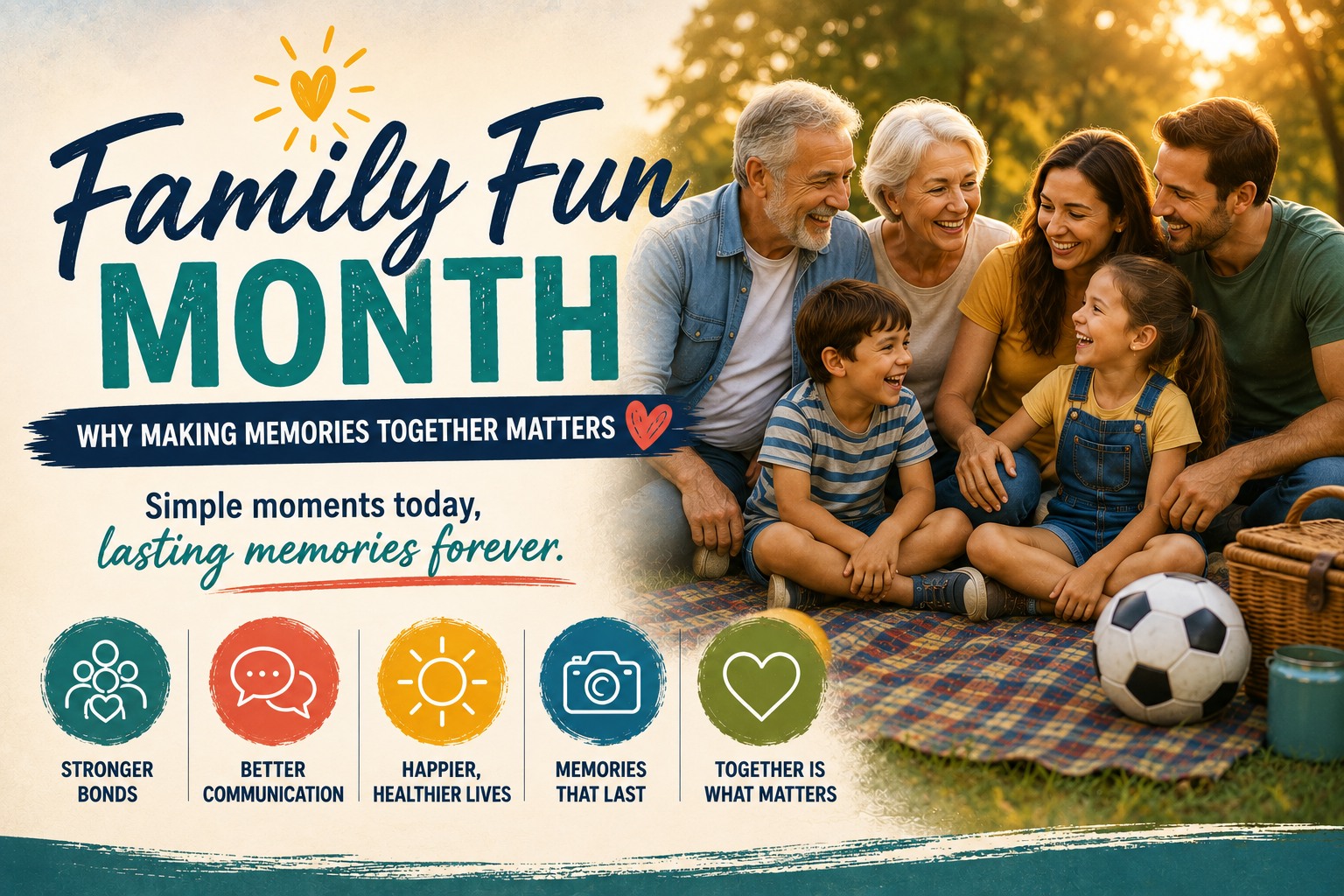
Every August, families across the United States celebrate Family Fun Month, a reminder to slow down, unplug from daily distractions, and spend meaningful time with the people who matter most. While family vacations and special outings are wonderful, creating lasting memories doesn't have to be expensive or elaborate. Often, the moments children and adults remember most are the simple ones spent laughing, talking, and enjoying each other's company. In today's fast-paced world, work schedules, school activities, sports, and technology often compete for our attention. Family Fun Month serves as an opportunity to intentionally reconnect before the busy routines of fall. Research consistently shows that strong family relationships contribute to healthier, happier lives. Families who spend quality time together often experience better communication, stronger emotional bonds, increased self-esteem in children, greater resilience during stressful times, improved mental health, and a stronger sense of belonging and security. Quality time also creates opportunities for children to develop important life skills. Everyday conversations during dinner, a walk through the park, or a family game night help children build confidence, strengthen language skills, learn problem-solving, and develop empathy. For adults, spending time with loved ones can reduce stress, improve mood, and provide a sense of connection that supports overall well-being. It's more about quality, not quantity. One of the biggest misconceptions about family time is that it requires hours of planning or expensive vacations. In reality, meaningful moments often happen during ordinary activities such as cooking dinner together, playing board games, taking an evening walk, reading bedtime stories, working on a puzzle, gardening, watching the sunset, or having a picnic at a local park. The key isn't the activity, but rather being fully present. Putting away phones, turning off notifications, and giving one another undivided attention helps strengthen relationships and creates memories that last far longer than another hour spent scrolling through social media. Unplugging can help us reconnect. Technology has brought countless conveniences, but it has also created new challenges for family relationships. According to the American Academy of Pediatrics, creating intentional "screen-free" times allows families to communicate more effectively and encourages stronger social and emotional development in children. Consider establishing simple traditions such as device-free dinners, family game nights, weekend outdoor adventures, evening neighborhood walks, or monthly family movie nights. These routines provide something everyone can look forward to while reinforcing healthy habits. Celebrating Family Fun Month doesn't require a large budget. Some of the best activities cost little or nothing at all. Try one of these ideas: visit a local park or nature trail, build a backyard obstacle course, fly kites on a windy afternoon, have a family talent show, create homemade pizzas together, host a scavenger hunt, camp in the backyard, visit your local library, explore a nearby museum on a free admission day, volunteer together in your community, start a family scrapbook, make homemade ice cream, watch the stars and learn about constellations, have a water balloon fight or sprinkler day, or take turns choosing everyone's favorite board game. The goal isn't about perfection; it's about participation. Family traditions create a sense of identity and belonging. Whether it's Sunday pancake breakfasts, annual camping trips, holiday baking, or Friday movie nights, traditions become the stories families tell for years to come. Children especially benefit from predictable traditions because they provide comfort, stability, and opportunities to create positive memories that often continue into adulthood. Even simple traditions like taking a family photo on the first day of school or making homemade birthday breakfasts can become cherished rituals. Every family looks different, and Family Fun Month is for everyone. Families may include parents, grandparents, siblings, foster families, adoptive families, close friends, or chosen family members. What matters most isn't who lives under the same roof; it's the love, support, and connections that people build together. Family fun can also be adapted for every age and ability. Whether it's a stroller walk with a toddler, an accessible nature trail for a family member using a wheelchair, a card game with grandparents, or a virtual game night with relatives across the country, there are countless ways to enjoy time together. Years from now, most people won't remember every toy they received, or every television show they watched. They'll remember the camping trip where it rained all weekend, the cookies everyone burned together, the family road trip filled with singing, or the evening spent laughing around the dinner table. These shared experiences help shape who we are and remind us that life's greatest moments are often the simplest. Family Fun Month is more than another observance on the calendar; it's a reminder that strong relationships are built one moment at a time. Whether it's a weekend adventure or fifteen uninterrupted minutes before bedtime, spending quality time together strengthens relationships, improves emotional well-being, and creates memories that last a lifetime. This August, challenge your family to put away the devices, embrace the simple moments, and make time for what matters most—each other. References American Academy of Pediatrics (2025), Family Media Plan. American Psychological Association (2023), Building strong family relationships and resilience. National Day Calendar (2026), Family Fun Month. National Institutes of Health (2018) The Power of Social Connection. Awareness Days. (2026), Family Fun Month
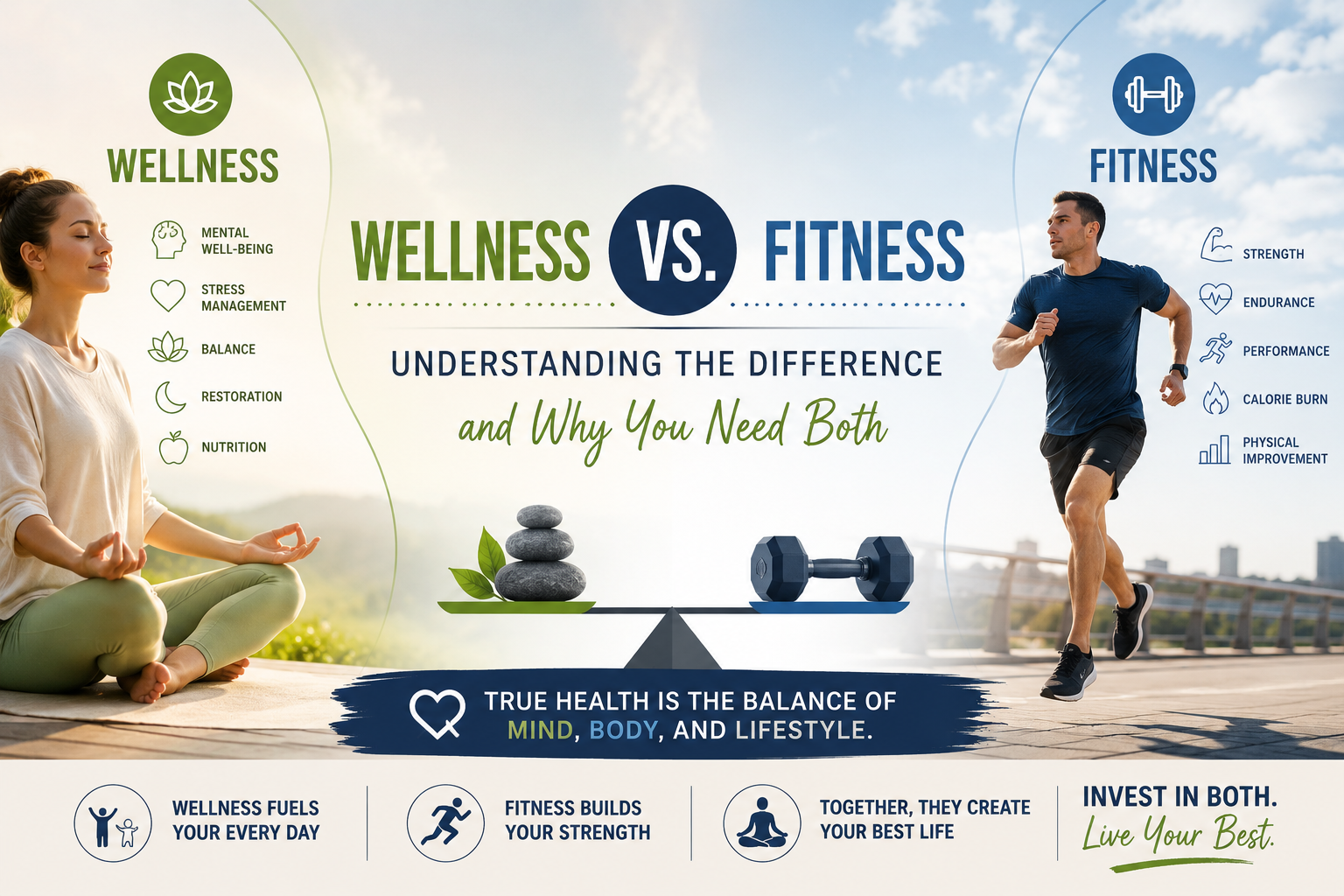
When people set out to improve their health, the focus is often on fitness, joining a gym, starting a walking program, lifting weights, or training for a race. While these are excellent goals, fitness is only one component of living a healthy life. Wellness is a much broader concept. It recognizes that true health isn't measured solely by how much you can bench press, how fast you can run, or the number on the scale. Instead, wellness encompasses every aspect of your physical, mental, emotional, and social well-being. Understanding the disti nction between wellness and fitness can help you create sustainable habits that support not just a healthier body but a happier, more balanced life. What Is Fitness? Fitness refers to y our body's ability to perform physical activities safely and efficiently. Health professionals generally recognize five components of physical fitness. They include cardiovascular endurance, muscular strength, muscular endurance, flexibility, and body composition. Improving these areas can lower the risk of chronic disease, strengthen bones and muscles, improve heart health, increase energy levels, and enhance mobility throughout life. The Centers for Disease Control and Prevention (CDC) recommends that adults get at least 150 minutes of moderate-intensity aerobic activity, along with muscle strengthening activities on two or more days each week. While these recommendations provide an excellent foundation for physical health, fitness alone does not guarantee overall well-being. What Is Wellness? Wellness is an active process of making choices that support a healthy and fulfilling life. Unlike fitness, which primarily focuses on physical performance, wellness recognizes that many aspects of life contribute to overall health. One of the most widely accepted models identifies eight dimensions of wellness. Physical wellness includes exercise, nutritious eating, adequate sleep, preventive healthcare, hydration, and avoiding harmful habits such as smoking or excessive alcohol consumption. Emotional wellness involves understanding and managing emotions, coping with stress in healthy ways, practicing resilience, and seeking support when needed. Intellectual wellness includes keeping the mind engaged through reading, learning new skills, solving problems, pursuing hobbies, or continuing education helps promote lifelong brain health. Social Wellness involves healthy relationships that provide emotional support, reduce feelings of isolation, and contribute significantly to overall happiness and longevity. Finding meaning and satisfaction in work or volunteer activities can improve motivation, reduce stress, and increase overall life satisfaction. For some, spirituality comes through religious faith. For others, it may involve meditation, spending time in nature, practicing gratitude, or living according to personal values. Creating safe, healthy surroundings and caring for the environment can contribute to both personal and community well-being. Financial wellness involves managing money responsibly, planning for future needs, reducing unnecessary debt, and minimizing financial stress. Fitness supports wellness and wellness supports fitness; although they're different, wellness and fitness are closely connected. Regular exercise has been shown to improve mood, reduce anxiety and depression, promote better sleep, increase energy, enhance cognitive function, and reduce the risk of numerous chronic diseases at the same time. Practicing wellness habits makes it easier to stay physically active. For example, getting enough sleep improves exercise performance and recovery. Managing stress can reduce fatigue and improve motivation. Eating nutritious foods fuels workouts and supports muscle repair. Strong social connections often increase accountability and consistency with healthy habits. Rather than viewing fitness as the end goal, many health professionals consider it an important component of lifelong wellness. Modern life places demand on nearly every aspect of our well-being. Long work hours, financial pressures, chronic stress, poor sleep, and social isolation can all affect our health even if we're physically active. Research consistently shows that people who intentionally care for multiple dimensions of wellness experience numerous benefits, including lower stress levels, better mental health, improved quality of sleep, reduced risk of chronic illness, stronger immune function, greater resilience during difficult times and increased life satisfaction. Wellness is not about achieving perfection. Its about making small, intentional choices that support long-term health. Creating a healthier life doesn't require a complete overhaul overnight. In fact, lasting change usually begins with simple, consistent habits. Consider incorporating small actions such as taking a daily walk, drinking more water, preparing balanced meals, practicing gratitude, calling a friend or loved one, spending time outdoors, prioritizing quality sleep, scheduling routine medical checkups, learning something new, and setting realistic financial goals. These habits may seem small individually, but together they can create meaningful improvements in overall health and quality of life. Fitness helps build a stronger body, but wellness builds a healthier life. Exercise is important, but so are emotional health, meaningful relationships, quality sleep, financial stability, personal growth, and a sense of purpose. When these areas work together, they create a foundation for lasting health that extends far beyond the gym. Instead of asking, "How fit am I?" perhaps the better question is, "How well am I living?" The answer may be the first step toward a healthier future. References Centers for Disease Control and Prevention (2025). Physical Activity Basics for Adults; Global Wellness Institute. (2024). What Is Wellness?; National Institutes of Health, National Center for Complementary and Integrative Health. (2024). Exercise and Physical Activity; Substance Abuse and Mental Health Services Administration. (2024); Eight Dimensions of Wellness (2025).; World Health Organization. (2025). Physical Activity.