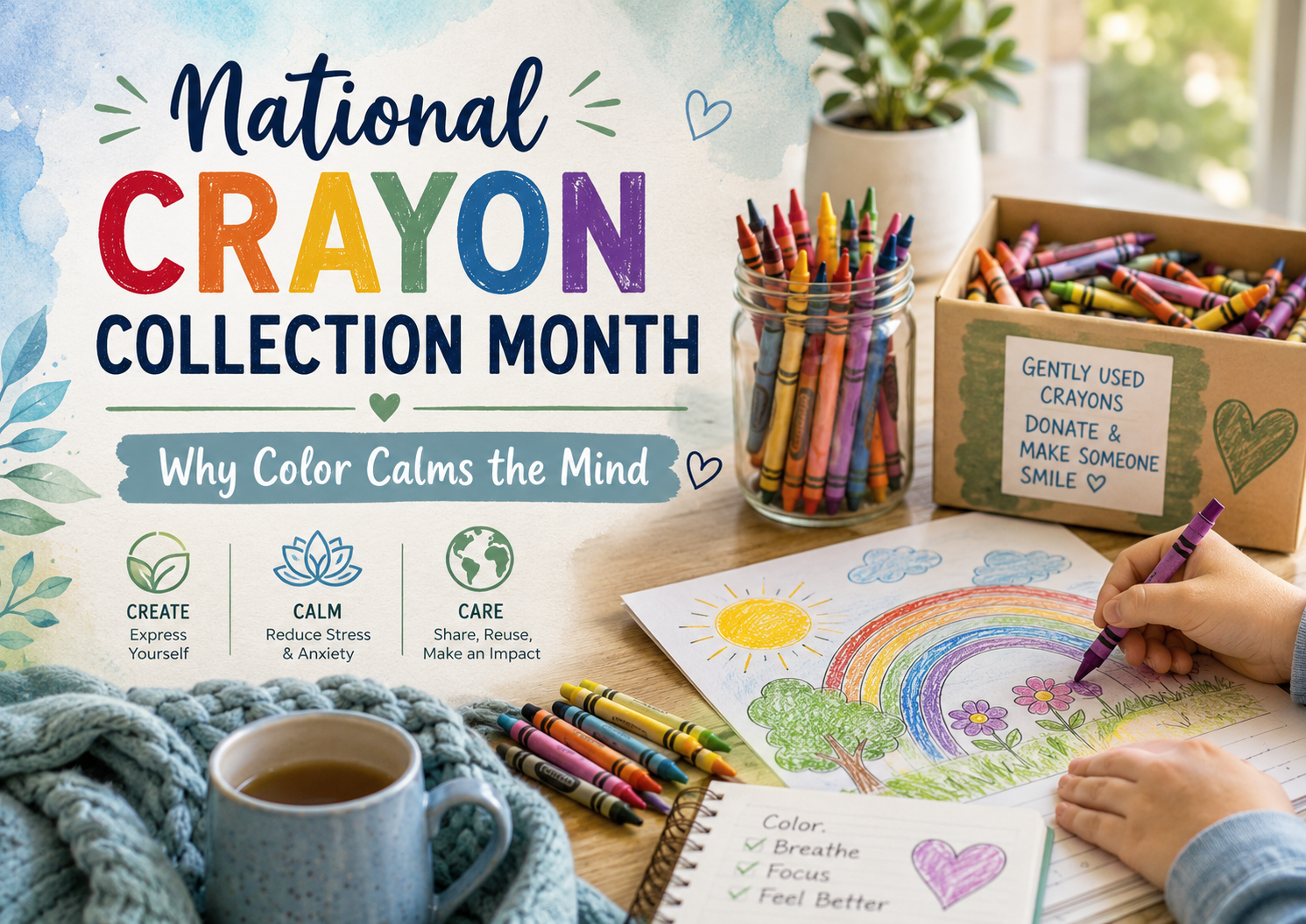
National Crayon Collection Month: Why Color Calms the Mind

August 12, 2026

Every August, National Crayon Collection Month celebrates creativity, education, sustainability, and the positive impact art has on mental well-being. The observance encourages people to collect gently used crayons and donate them to children who can benefit from creative expression while keeping usable crayons out of landfills.


Coloring is a form of active mindfulness. Focusing on choosing colors and filling shapes redirects attention away from daily stressors and toward the present moment. This simple activity can quiet racing thoughts and promote relaxation. 


Research suggests coloring may reduce stress, encourage mindfulness, provide a healthy creative outlet, improve concentration, and create a sense of accomplishment after completing a picture. For children, coloring also strengthens fine motor skills, hand-eye coordination, and early writing readiness.


Although color preferences vary by person and culture, cool colors such as blues and greens are often associated with calmness, while brighter colors like yellow may evoke optimism and energy. The combination of focused attention and enjoyable color choices contributes to the relaxing effects of coloring.


You can celebrate National Crayon Collection Month by donating gently used crayons, host a community collection drive, enjoy a family coloring session, or pick up an adult coloring book for a relaxing screen-free activity. A simple box of crayons can spark creativity, support emotional well-being, and make a meaningful difference for children.


References

Cleveland Clinic. 3 Reasons Adult Coloring Can Actually Relax Your Brain. Mayo Clinic Health System. Coloring is Good for Your Health.3. Elliot, A. J. (2019). A Historically Based Review of Empirical Work on Color and Psychological Functioning. St. Louis Children's Hospital. Why I Still Encourage Crayons. National Day Calendar. National Crayon Collection Month. Awareness Days. National Crayon Collection Month.


August 12, 2026
By Julia Welch I was so excited to write about this subject! I have five rescue animals, three dogs and two cats. While I’m recovering from a spinal cord injury, they have been saving my grace. When I joined The 34 Project for my recovery, I discovered that there are two dogs that are a mainstay at the gym, Daisy and Dexter. They bring me so much joy every time I go to the gym! Many other dogs visit; some are service dogs, and there is even a skunk that visits! Included at the bottom of this article are numerous pictures of the animals we have the pleasure of interacting with. I hope you enjoy them! There's a reason many dog owners say their four-legged companions are members of the family. Whether it's the enthusiastic tail wag when you walk or roll through the door, the comforting presence during difficult times, or the joyful excitement over something as simple as a walk around the block, dogs have a remarkable ability to brighten our lives. Science is beginning to explain why. Researchers have discovered that our relationships with dogs involve complex interactions between the brain, hormones, emotions, and behavior. From the release of “feel-good” chemicals to the possibility that mirror neuron systems help us connect emotionally, our canine companions may improve our mental well-being in ways we’re only beginning to understand. The human-dog bond is more than emotional. Humans have lived alongside dogs for thousands of years. During that time, dogs evolved to understand human facial expressions, body language, tone of voice, and even our emotions. Studies show that dogs can recognize when we're happy, stressed, frightened, or sad. Many owners have experienced a dog quietly resting beside them during a difficult day or responding excitedly when they celebrate good news. This emotional connection goes both ways. Researchers describe this as emotional contagion, the tendency for emotions to spread between individuals. Just as people often smile when others smile, dogs and humans frequently influence each other's emotional states. One possible explanation for this emotional connection involves mirror neurons. Mirror neurons are specialized brain cells first discovered in monkeys during the 1990s. These neurons become active not only when an individual performs an action but also when they observe someone else performing the same action. Scientists believe mirror neuron systems may contribute to empathy, learning through observation, and understanding the emotions of others. Although researchers continue to study exactly how mirror neurons function in humans, many neuroscientists believe they may play a role in why we instinctively respond to another person's smile, or even to a dog's joyful behavior. When your dog greets you with excitement, playfulness, and affection, your brain may naturally mirror some of that positive emotional state, helping lift your own mood. Mirror neurons may be only part of the story. One of the most powerful biological responses occurs through the release of oxytocin, often called the "love hormone" or "bonding hormone." Research has shown that when people make eye contact with or pet their dogs, oxytocin levels increase in both humans and dogs. Oxytocin helps promote feelings of trust, strengthen social bonds, reduce stress, increase feelings of safety, and encourage relaxation. This same hormone plays an important role in parent-child bonding, close friendships, and healthy romantic relationships. In many ways, interacting with a beloved dog activates similar biological pathways. Life is full of deadlines, responsibilities, and unexpected challenges. Dogs often provide a welcome antidote. Numerous studies have found that spending time with dogs can lower levels of cortisol, the body's primary stress hormone. Even brief interactions, such as petting a friendly dog for several minutes, have been associated with reduced stress and improved mood. Many hospitals, nursing homes, colleges, and rehabilitation centers now incorporate therapy dogs because of these calming effects. Dogs live almost entirely in the present moment. They aren't worried about tomorrow's meeting or yesterday's mistakes. They celebrate simple pleasures like a favorite toy, a walk around the neighborhood, a game of fetch, a sunny patch of grass, or spending time with their favorite person. Watching a dog experience pure joy over everyday moments often reminds us to slow down and appreciate life's simple pleasures. The benefits aren't limited to emotional health. Dog ownership has been associated with several healthy lifestyle behaviors, including Increased physical activity through daily walks, more time spent outdoors, greater social interaction with neighbors and other pet owners, more consistent daily routines, and reduced feelings of loneliness. These habits contribute to both physical and mental wellness. Perhaps one of the greatest gifts dogs offer is unconditional acceptance. Dogs don't care about your job title, appearance, income, or social status; they're simply happy you're home. For individuals coping with grief, anxiety, depression, chronic illness, disability, or major life transitions, that unwavering companionship can provide tremendous emotional comfort. While dogs aren't a substitute for professional mental health care when it's needed, they often become an important part of a person's overall support system. Dog Month is the perfect opportunity to recognize everything our canine companions do for us. You can celebrate by taking an extra walk together, trying a new enrichment activity, scheduling a wellness exam with your veterinarian, teaching a new trick, donating to a local animal shelter, volunteering with a rescue organization, or simply spending quality time together. The greatest gift your dog wants isn't an expensive toy; it's your attention. Our connection with dogs is rooted in far more than companionship. Through emotional bonding, stress reduction, oxytocin release, and the remarkable ways humans and dogs communicate, our canine friends help improve both our mental and physical well-being. Scientists continue to explore exactly how mirror neuron systems contribute to this relationship, but one thing is already clear: sharing life with a dog can enrich our lives in countless ways. So the next time your dog greets you with a wagging tail, joyful eyes, and unconditional enthusiasm, remember, you may both be experiencing a little neuroscience in action. References Berns, G. S. (2013). How Dogs Love Us: A Neuroscientist and His Adopted Dog Decode the Canine Brain. New Harvest. Centers for Disease Control and Prevention. (2024). About Pets & People's Health. Handlin, L., Hydbring-Sandberg, E., Nilsson, A., Ejdebäck, M., Jansson, A., & Uvnäs-Moberg, K. (2011). Short-term interaction between dogs and their owners: Effects on oxytocin, cortisol, insulin, and heart rate. Anthrozoös, 24(3), 301–315. National Institutes of Health. (2018). The Power of Pets. Rizzolatti, G., & Craighero, L. (2004). The mirror-neuron system. Annual Review of Neuroscience, 27, 169–192. World Small Animal Veterinary Association. (2020). The Human-Animal Bond Guidelines.

August 10, 2026
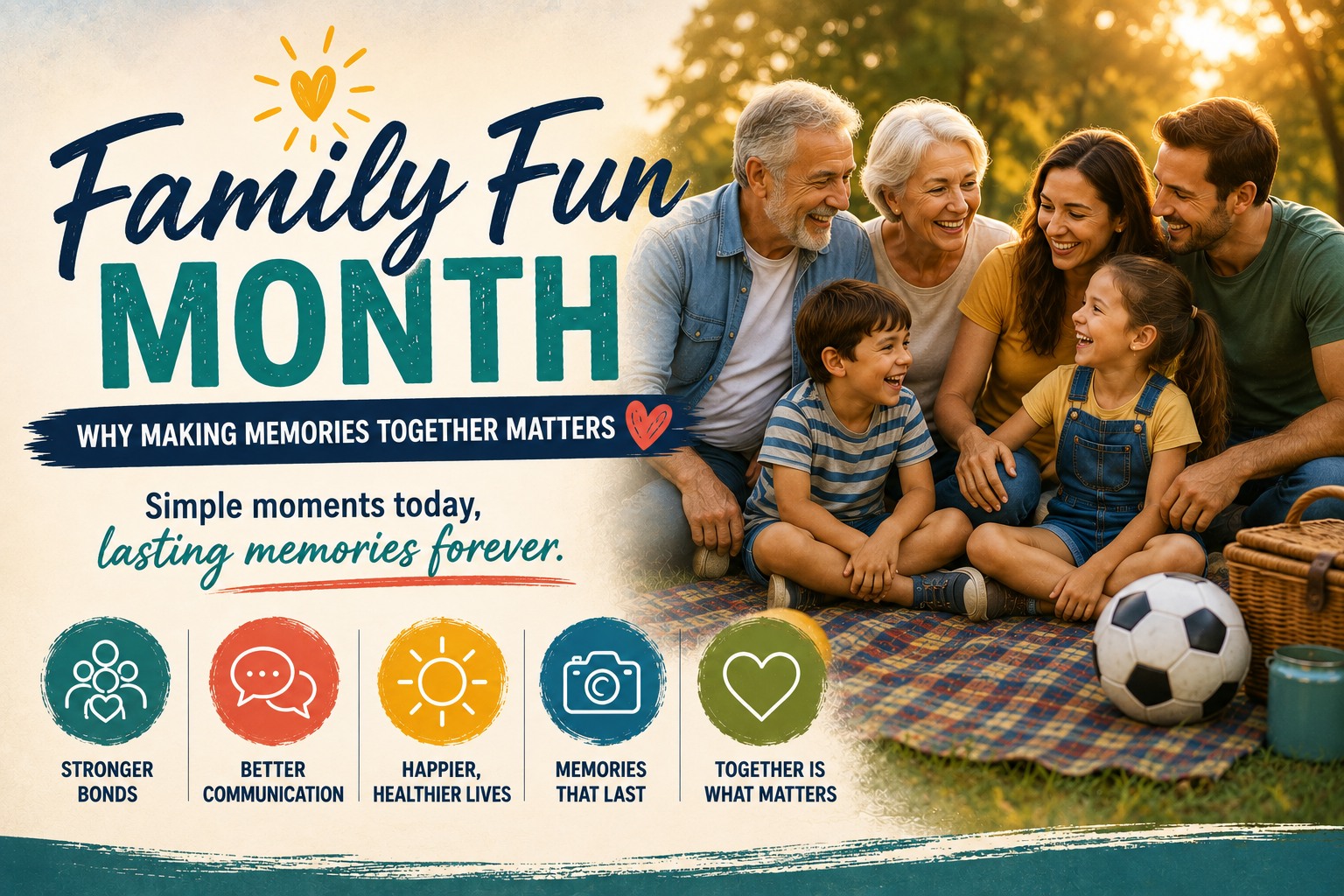
Every August, families across the United States celebrate Family Fun Month, a reminder to slow down, unplug from daily distractions, and spend meaningful time with the people who matter most. While family vacations and special outings are wonderful, creating lasting memories doesn't have to be expensive or elaborate. Often, the moments children and adults remember most are the simple ones spent laughing, talking, and enjoying each other's company. In today's fast-paced world, work schedules, school activities, sports, and technology often compete for our attention. Family Fun Month serves as an opportunity to intentionally reconnect before the busy routines of fall. Research consistently shows that strong family relationships contribute to healthier, happier lives. Families who spend quality time together often experience better communication, stronger emotional bonds, increased self-esteem in children, greater resilience during stressful times, improved mental health, and a stronger sense of belonging and security. Quality time also creates opportunities for children to develop important life skills. Everyday conversations during dinner, a walk through the park, or a family game night help children build confidence, strengthen language skills, learn problem-solving, and develop empathy. For adults, spending time with loved ones can reduce stress, improve mood, and provide a sense of connection that supports overall well-being. It's more about quality, not quantity. One of the biggest misconceptions about family time is that it requires hours of planning or expensive vacations. In reality, meaningful moments often happen during ordinary activities such as cooking dinner together, playing board games, taking an evening walk, reading bedtime stories, working on a puzzle, gardening, watching the sunset, or having a picnic at a local park. The key isn't the activity, but rather being fully present. Putting away phones, turning off notifications, and giving one another undivided attention helps strengthen relationships and creates memories that last far longer than another hour spent scrolling through social media. Unplugging can help us reconnect. Technology has brought countless conveniences, but it has also created new challenges for family relationships. According to the American Academy of Pediatrics, creating intentional "screen-free" times allows families to communicate more effectively and encourages stronger social and emotional development in children. Consider establishing simple traditions such as device-free dinners, family game nights, weekend outdoor adventures, evening neighborhood walks, or monthly family movie nights. These routines provide something everyone can look forward to while reinforcing healthy habits. Celebrating Family Fun Month doesn't require a large budget. Some of the best activities cost little or nothing at all. Try one of these ideas: visit a local park or nature trail, build a backyard obstacle course, fly kites on a windy afternoon, have a family talent show, create homemade pizzas together, host a scavenger hunt, camp in the backyard, visit your local library, explore a nearby museum on a free admission day, volunteer together in your community, start a family scrapbook, make homemade ice cream, watch the stars and learn about constellations, have a water balloon fight or sprinkler day, or take turns choosing everyone's favorite board game. The goal isn't about perfection; it's about participation. Family traditions create a sense of identity and belonging. Whether it's Sunday pancake breakfasts, annual camping trips, holiday baking, or Friday movie nights, traditions become the stories families tell for years to come. Children especially benefit from predictable traditions because they provide comfort, stability, and opportunities to create positive memories that often continue into adulthood. Even simple traditions like taking a family photo on the first day of school or making homemade birthday breakfasts can become cherished rituals. Every family looks different, and Family Fun Month is for everyone. Families may include parents, grandparents, siblings, foster families, adoptive families, close friends, or chosen family members. What matters most isn't who lives under the same roof; it's the love, support, and connections that people build together. Family fun can also be adapted for every age and ability. Whether it's a stroller walk with a toddler, an accessible nature trail for a family member using a wheelchair, a card game with grandparents, or a virtual game night with relatives across the country, there are countless ways to enjoy time together. Years from now, most people won't remember every toy they received, or every television show they watched. They'll remember the camping trip where it rained all weekend, the cookies everyone burned together, the family road trip filled with singing, or the evening spent laughing around the dinner table. These shared experiences help shape who we are and remind us that life's greatest moments are often the simplest. Family Fun Month is more than another observance on the calendar; it's a reminder that strong relationships are built one moment at a time. Whether it's a weekend adventure or fifteen uninterrupted minutes before bedtime, spending quality time together strengthens relationships, improves emotional well-being, and creates memories that last a lifetime. This August, challenge your family to put away the devices, embrace the simple moments, and make time for what matters most—each other. References American Academy of Pediatrics (2025), Family Media Plan. American Psychological Association (2023), Building strong family relationships and resilience. National Day Calendar (2026), Family Fun Month. National Institutes of Health (2018) The Power of Social Connection. Awareness Days. (2026), Family Fun Month
August 9, 2026
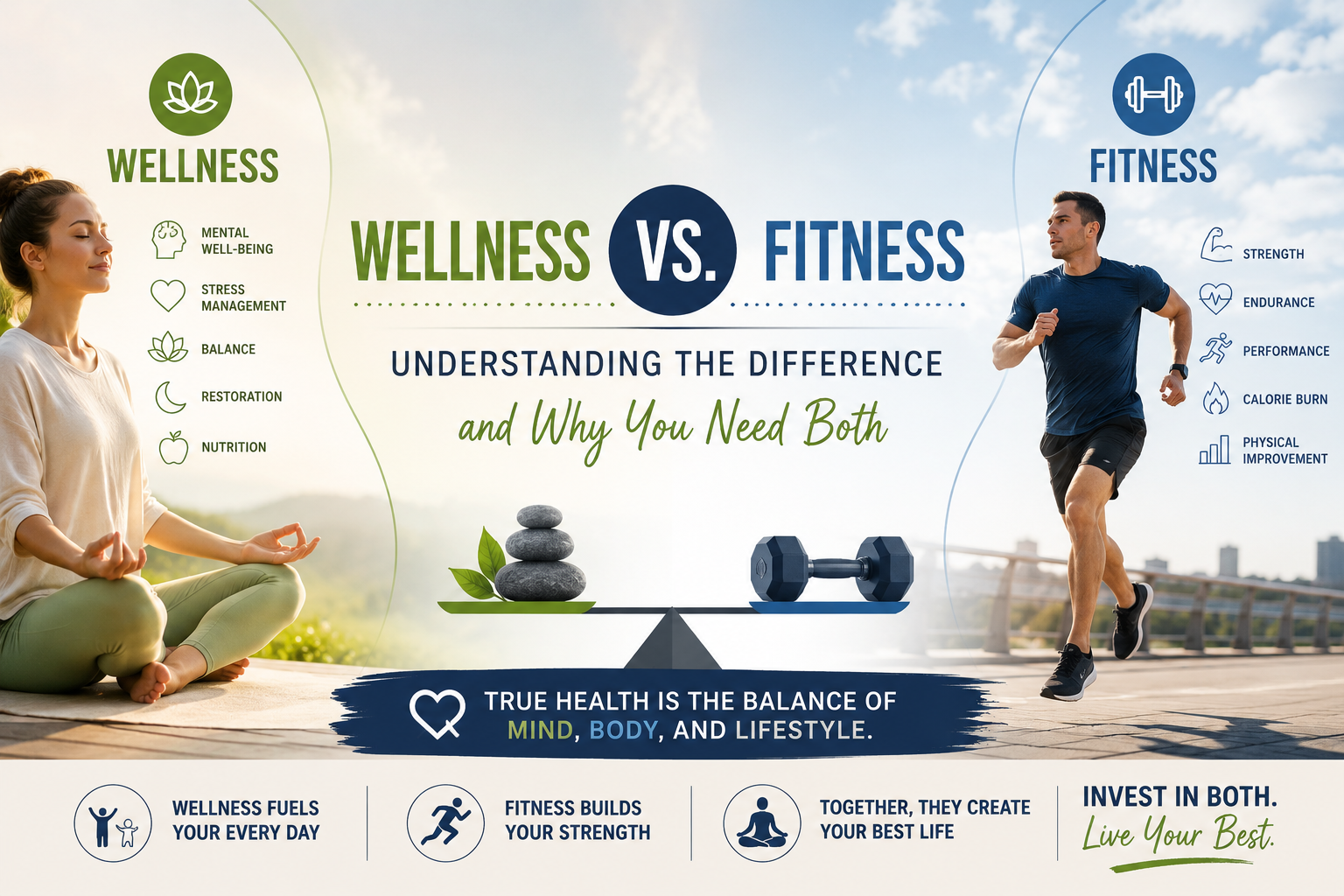
 When people set out to improve their health, the focus is often on fitness, joining a gym, starting a walking program, lifting weights, or training for a race. While these are excellent goals, fitness is only one component of living a healthy life. Wellness is a much broader concept. It recognizes that true health isn't measured solely by how much you can bench press, how fast you can run, or the number on the scale. Instead, wellness encompasses every aspect of your physical, mental, emotional, and social well-being. Understanding the disti nction between wellness and fitness can help you create sustainable habits that support not just a healthier body but a happier, more balanced life. What Is Fitness? Fitness refers to y our body's ability to perform physical activities safely and efficiently. Health professionals generally recognize five components of physical fitness. They include cardiovascular endurance, muscular strength, muscular endurance, flexibility, and body composition. Improving these areas can lower the risk of chronic disease, strengthen bones and muscles, improve heart health, increase energy levels, and enhance mobility throughout life. The Centers for Disease Control and Prevention (CDC) recommends that adults get at least 150 minutes of moderate-intensity aerobic activity, along with muscle strengthening activities on two or more days each week. While these recommendations provide an excellent foundation for physical health, fitness alone does not guarantee overall well-being. What Is Wellness? Wellness is an active process of making choices that support a healthy and fulfilling life. Unlike fitness, which primarily focuses on physical performance, wellness recognizes that many aspects of life contribute to overall health. One of the most widely accepted models identifies eight dimensions of wellness. Physical wellness includes exercise, nutritious eating, adequate sleep, preventive healthcare, hydration, and avoiding harmful habits such as smoking or excessive alcohol consumption. Emotional wellness involves understanding and managing emotions, coping with stress in healthy ways, practicing resilience, and seeking support when needed. Intellectual wellness includes keeping the mind engaged through reading, learning new skills, solving problems, pursuing hobbies, or continuing education helps promote lifelong brain health. Social Wellness involves healthy relationships that provide emotional support, reduce feelings of isolation, and contribute significantly to overall happiness and longevity. Finding meaning and satisfaction in work or volunteer activities can improve motivation, reduce stress, and increase overall life satisfaction. For some, spirituality comes through religious faith. For others, it may involve meditation, spending time in nature, practicing gratitude, or living according to personal values. Creating safe, healthy surroundings and caring for the environment can contribute to both personal and community well-being. Financial wellness involves managing money responsibly, planning for future needs, reducing unnecessary debt, and minimizing financial stress. Fitness supports wellness and wellness supports fitness; although they're different, wellness and fitness are closely connected. Regular exercise has been shown to improve mood, reduce anxiety and depression, promote better sleep, increase energy, enhance cognitive function, and reduce the risk of numerous chronic diseases at the same time. Practicing wellness habits makes it easier to stay physically active. For example, getting enough sleep improves exercise performance and recovery. Managing stress can reduce fatigue and improve motivation. Eating nutritious foods fuels workouts and supports muscle repair. Strong social connections often increase accountability and consistency with healthy habits. Rather than viewing fitness as the end goal, many health professionals consider it an important component of lifelong wellness. Modern life places demand on nearly every aspect of our well-being. Long work hours, financial pressures, chronic stress, poor sleep, and social isolation can all affect our health even if we're physically active. Research consistently shows that people who intentionally care for multiple dimensions of wellness experience numerous benefits, including lower stress levels, better mental health, improved quality of sleep, reduced risk of chronic illness, stronger immune function, greater resilience during difficult times and increased life satisfaction. Wellness is not about achieving perfection. Its about making small, intentional choices that support long-term health. Creating a healthier life doesn't require a complete overhaul overnight. In fact, lasting change usually begins with simple, consistent habits. Consider incorporating small actions such as taking a daily walk, drinking more water, preparing balanced meals, practicing gratitude, calling a friend or loved one, spending time outdoors, prioritizing quality sleep, scheduling routine medical checkups, learning something new, and setting realistic financial goals. These habits may seem small individually, but together they can create meaningful improvements in overall health and quality of life. Fitness helps build a stronger body, but wellness builds a healthier life. Exercise is important, but so are emotional health, meaningful relationships, quality sleep, financial stability, personal growth, and a sense of purpose. When these areas work together, they create a foundation for lasting health that extends far beyond the gym. Instead of asking, "How fit am I?" perhaps the better question is, "How well am I living?" The answer may be the first step toward a healthier future. References Centers for Disease Control and Prevention (2025). Physical Activity Basics for Adults; Global Wellness Institute. (2024). What Is Wellness?; National Institutes of Health, National Center for Complementary and Integrative Health. (2024). Exercise and Physical Activity; Substance Abuse and Mental Health Services Administration. (2024); Eight Dimensions of Wellness (2025).; World Health Organization. (2025). Physical Activity.
July 12, 2026
 Feel like your child needs a little more structure this summer? Try Dianne’s simple 3-step approach to prevent the “summer slide” and keep learning moving forward—without the overwhelm.
July 12, 2026
Believe it or not, breaks from formal schooling actually support learning! Time away gives the brain a chance to process and store information—moving it from short-term memory into long-term retention. In many ways, rest is productive ! Having a dedicated break period also supports mental health by allowing space for emotional regulation and helping reduce stress and anxiety. When students return from a true break, they’re often more refreshed, focused, and ready to learn.
June 17, 2026
PTSD affects each person differently. Some individuals experience symptoms immediately after a traumatic event, while others may not develop symptoms until months or even years later. The condition can impact physical health as well, contributing to fatigue, headaches, chronic stress, and other health concerns.
June 17, 2026
For athletes and active individuals, one of the most effective ways to reduce the risk of serious injury is by using proper protective equipment. Whether you're riding a bicycle, skateboarding, participating in contact sports, or enjoying outdoor recreation, wearing a properly fitted helmet can significantly reduce the risk of head injuries. Safety experts consistently emphasize that helmets are one of the most effective pieces of protective equipment available for preventing serious brain injuries during sports and recreational activities.
June 17, 2026
Traumatic brain injury is a complex neurological condition with far-reaching physical, cognitive, emotional, and social consequences. Although recovery varies considerably among individuals, advances in acute medical care, rehabilitation science, and neuroplasticity research have improved outcomes for many survivors. Early diagnosis, comprehensive rehabilitation, and long-term support remain essential for maximizing functional recovery and quality of life following TBI.
May 11, 2026
Pilates: A Gentle Path to Neurological Health, Strength and Stability
Happy couple enjoying the health benefits of dance.
October 18, 2023
Find out how dance supports physical and psychological wellbeing. This blog will describe the health benefits that dance can provide for every individual, with a specific focus on those with parkinson's disease.
More Posts